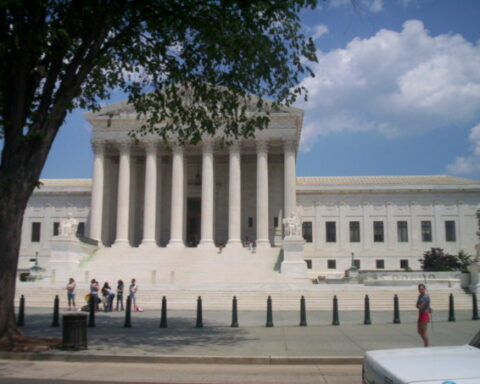
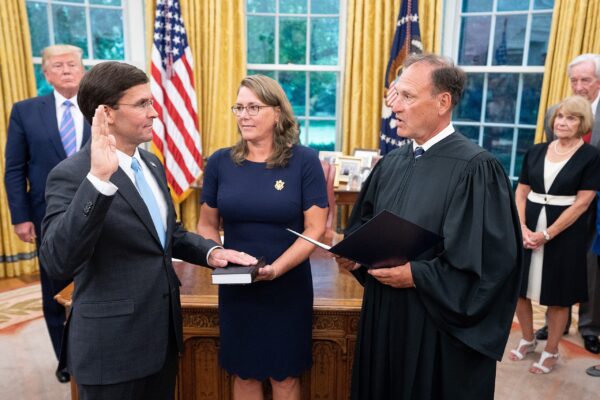
Supreme Court Justice Samuel Alito recused himself Thursday from a major legal battle between Louisiana parishes and several large oil companies, a move that came just days before the case is scheduled to be argued before the high court.
While Alito frequently steps aside from cases due to his personal stock holdings, the timing of this recusal drew attention. The conservative justice had participated in the case last summer when the Supreme Court voted to take it up. His decision to withdraw was announced less than a week before oral arguments, leaving the case to be heard by only eight justices.
In a letter sent to the parties, Supreme Court Clerk Scott Harris explained that Alito’s recusal was tied to his ownership of stock in ConocoPhillips, which is the parent company of Burlington Resources Oil and Gas Company. Burlington Resources is one of the companies named in the underlying lawsuit.
Before the Supreme Court agreed to hear the case, Burlington Resources sent a letter to the justices stating that it was “withdrawing” and would not “have any other involvement” in the case. Based on that representation, Alito initially concluded that recusal was not necessary, according to Harris.
However, Harris explained that subsequent legal filings clarified Burlington’s continued role in the litigation. “Later briefing, however, noted that Burlington remained a party in the district court,” Harris wrote, prompting Alito to step aside.
Most Supreme Court justices avoid direct ownership of individual stocks, relying instead on diversified investment vehicles to minimize conflicts. Alito’s decision to hold individual stocks has resulted in a higher number of recusals and has drawn criticism from some ethics watchdogs. According to a review of the court’s docket, Alito has recused himself 12 times during the current term from either petitions or cases at the merits stage, more than twice as many as any of his fellow justices.
With Alito out, the case will be argued Monday before the remaining eight members of the court. If the justices split evenly in a 4–4 decision, the ruling from the lower court would remain in place without establishing a nationwide precedent.
At issue is whether lawsuits filed in Louisiana state court by several parishes should be moved to federal court. The parishes allege that oil extraction projects caused damage to the state’s coastline. Energy companies including Chevron and Exxon Mobil are urging the Supreme Court to allow the cases to be heard in federal court instead.
Federal law permits cases to be transferred if the companies were “acting under” a federal officer. The oil companies argue that the claims are rooted in contracts entered into during World War II, when the federal government worked with their corporate predecessors to produce high-octane aviation fuel as part of a nationwide effort to rapidly expand wartime production.
The 5th U.S. Circuit Court of Appeals rejected that argument and ruled against the companies, keeping the lawsuits in state court. The Supreme Court agreed to review that decision, setting the stage for a closely watched ruling.
The high court is expected to issue its decision by early summer, with the outcome now hinging on an evenly divided bench following Alito’s late recusal.
[READ MORE: Jeopardy! Host Ken Jennings Sparks Political Firestorm With Call to Prosecute Trump “Regime”]