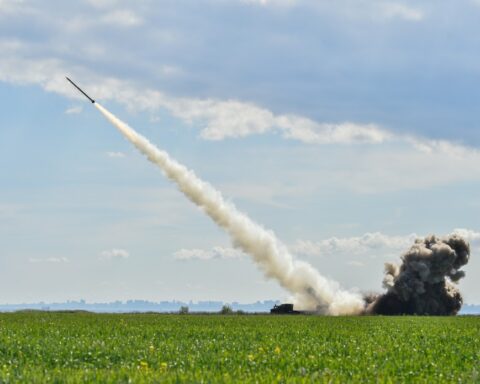
Iranian naval forces began military exercises Monday in the critical Strait of Hormuz, just one day before a second round of nuclear talks with the United States, underscoring the high stakes and mounting tensions surrounding renewed negotiations.
According to Iranian state media, the Islamic Revolutionary Guard Corps has dubbed the drills “Smart Control of Hormuz Strait.” The exercises are designed to rehearse responses to potential security and military threats in the strategic waterway, one of the most vital oil transit routes in the world.
The timing of the drills is significant. The Strait of Hormuz, which lies between Oman and Iran and connects the Persian Gulf with the Gulf of Oman and Arabian Sea, sees roughly one-fifth of the world’s total oil consumption pass through its narrow corridor. Any disruption to traffic there can send shockwaves through global energy markets.
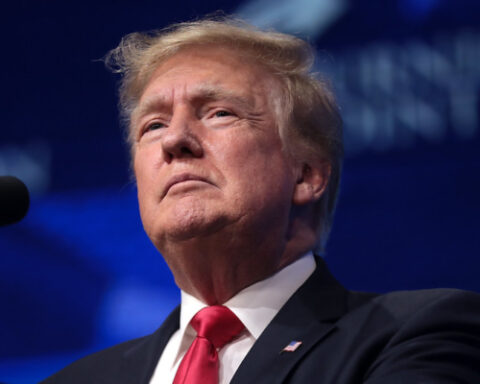
Meanwhile, Reuters reported that the United States is preparing for a potential weeks-long military operation against Iran if President Trump were to order an attack. The preparations come as Washington seeks to increase leverage ahead of negotiations aimed at curbing Tehran’s nuclear ambitions.
President Trump has already dispatched two aircraft carriers to the region, a visible show of American military strength as talks resume. The renewed diplomatic push comes less than a year after U.S.-Israeli strikes targeted Iranian nuclear facilities in June.
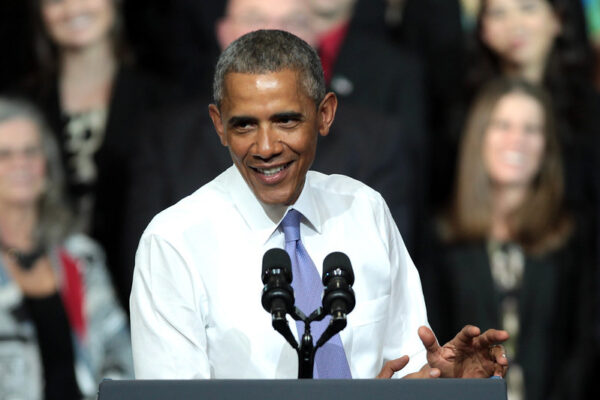
Trump is pursuing a new agreement that would limit Iran’s nuclear capabilities after withdrawing in 2018 from the Obama-era Joint Comprehensive Plan of Action. That agreement had placed restrictions on Iran’s uranium enrichment in exchange for sanctions relief. The current administration has signaled it is seeking broader terms.
It remains unclear whether U.S. officials will permit Iran to continue enriching uranium at any level. Tehran maintains that its nuclear program is for peaceful purposes. However, the Trump administration has insisted that Iran’s ballistic missile program and its support for terrorist proxies must also be addressed in any comprehensive deal — a condition Iran has rejected.
Secretary of State Marco Rubio, speaking to reporters Monday while traveling in Hungary, acknowledged the challenges of negotiating with Tehran.
“It’s been very difficult for anyone to do real deals with Iran, because we’re dealing with radical Shia clerics who are making theological decisions, not geopolitical ones,” Rubio said. “But let’s see what happens. I hope it works out.”
On Tuesday, a U.S. delegation led by Trump’s special envoy Steve Witkoff and son-in-law Jared Kushner is scheduled to meet Iranian officials in Geneva. The session follows a six-hour round of talks held earlier this month in Oman. Witkoff and Kushner are also expected to participate in separate discussions between Ukraine and Russia later that afternoon in Geneva.
Ahead of the Geneva talks, Iran’s Foreign Minister Seyed Abbas Araghchi met Monday with Rafael Grossi, head of the United Nations’ International Atomic Energy Agency. Grossi said on X that he held “in-depth technical discussions” with Araghchi in preparation for the upcoming negotiations.
Araghchi described the meeting as focused on technical aspects of Iran-IAEA cooperation, which has been strained since last year’s U.S. bombing campaign.
An Iranian diplomat suggested Sunday that a potential agreement could bring economic benefits. According to the semiofficial Fars news agency, Hamid Ghanbari, the foreign ministry’s deputy director for economic diplomacy, said negotiations include discussions of oil and gas cooperation, mining investments and even aircraft purchases.
As Iran conducts drills in one of the world’s most sensitive maritime chokepoints and U.S. forces remain on alert, the outcome of this latest round of talks could shape the next chapter in an already volatile standoff.
[READ MORE: Obama Claims ‘Aliens are Real’ in New Interview as UFO Questions Continue to Swirl]