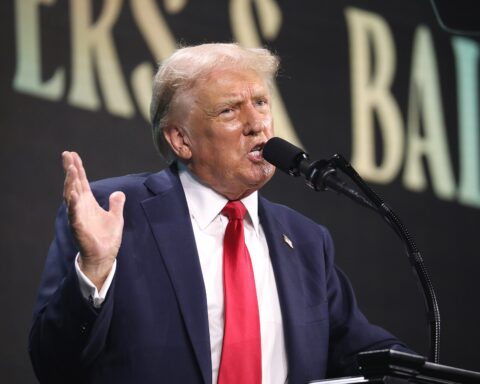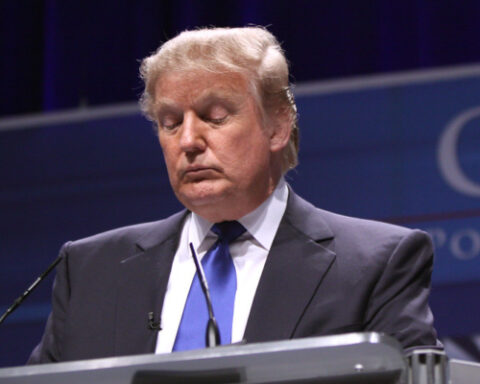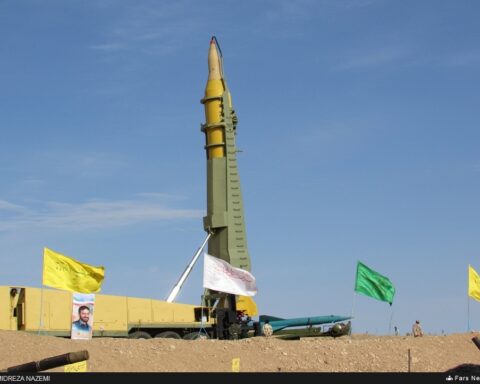
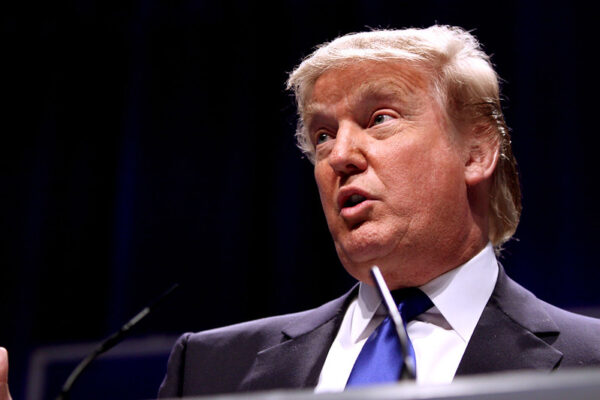
President Donald Trump delivered a blunt and forceful warning to Iran on Saturday, demanding the country “FULLY OPEN” the Strait of Hormuz within 48 hours or face sweeping military retaliation targeting its power infrastructure.
In a Truth Social post made at 7:44 p.m. ET, Trump laid out a clear deadline and a severe consequence if Iran fails to comply. His message left little room for interpretation, underscoring the administration’s increasingly hardline posture as the conflict continues.
“If Iran doesn’t FULLY OPEN, WITHOUT THREAT, the Strait of Hormuz, within 48 HOURS from this exact point in time, the United States of America will hit and obliterate their various POWER PLANTS, STARTING WITH THE BIGGEST ONE FIRST!” the president wrote. “Thank you for your attention to this matter.”
The ultimatum comes at a pivotal moment in Operation Epic Fury, the ongoing U.S. military campaign against Iran. Three weeks ago, joint U.S. and Israeli strikes killed Iranian Supreme Leader Ali Khamenei, a development that marked a dramatic escalation in the conflict. Since then, dozens of additional leaders tied to Iran’s theocratic regime have also been eliminated.
Despite these battlefield developments, the broader consequences of the war are increasingly visible, particularly in global trade and energy markets. The Strait of Hormuz, a critical waterway connecting the Persian Gulf with the Gulf of Oman and the Arabian Sea, has seen a steep decline in maritime traffic. According to the BBC, ship movement through the strait has dropped sharply in March.
Typically, about 138 vessels pass through the strait each day. Since the war began, that number has fallen to roughly 100, signaling significant disruption in one of the world’s most important shipping lanes.
The economic ripple effects have been just as pronounced. Oil prices have surged in recent weeks, reflecting both the instability in the region and concerns about supply constraints. By the close of trading on Friday, a barrel of oil was priced at $98.09, representing a 47% increase compared to the day before the war began.
Trump has repeatedly suggested that the conflict may soon wind down, projecting confidence that U.S. objectives are being met swiftly. Still, the president’s latest warning highlights how volatile the situation remains, with major decisions and potential escalations unfolding in real time.
On the same day as his ultimatum to Iran, Trump also took aim at media coverage of the war, singling out New York Times reporter David Sanger. The president criticized Sanger for reporting that many of the operation’s goals remain unmet, rejecting that assessment and insisting that progress has exceeded expectations.
“The United States has blown Iran off of the map, and yet their lightweight analyst, David Sanger, says that I haven’t met my own goals. Yes I have, and weeks ahead of schedule!” Trump wrote.
The contrast between Trump’s confident messaging and the tangible disruptions to global shipping and energy markets reflects a broader tension that often accompanies wartime leadership. While the administration emphasizes strength and speed, the downstream effects—from rising oil prices to reduced maritime traffic—serve as a reminder that even decisive military actions can carry far-reaching consequences.
As the 48-hour deadline approaches, the world is left watching closely, aware that the next move could shape not only the trajectory of the conflict but also the stability of a region already under intense strain.
[READ MORE: New Missile Test Signals Faster Military Innovation as War Costs Mount]