
Mortgage rates are now reportedly climbing once again, a development that underscores how instability abroad can quickly ripple into the wallets of American families. As tensions tied to the ongoing conflict involving Iran continue to disrupt global markets, the cost of borrowing for a home is steadily moving higher.
According to a Thursday report from Freddie Mac, the average rate for a 30-year fixed mortgage has reached 6.38 percent, while the 15-year fixed rate now stands at 5.75 percent. Both figures mark a noticeable increase over the past month, reversing what had briefly been a period of relief for prospective homebuyers.
Just weeks ago, at the end of February, the 30-year rate had dipped below 6 percent — its lowest level in three years. By March 12, it had already climbed back to 6.11 percent, and it has continued to rise since then. Current levels have not been seen since early September, signaling renewed pressure in the housing market.
Freddie Mac’s chief economist, Sam Khater, acknowledged the volatility while noting some signs of resilience. “Mortgage rates this week averaged 6.38%,” he said, adding that the housing market is still showing gradual improvement compared to a year ago. Purchase and refinance applications are reportedly up year-over-year, and rates remain below last year’s average of 6.65 percent.
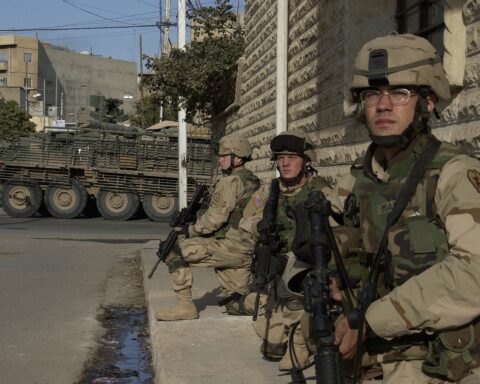
Still, the broader economic picture is becoming increasingly complicated. The Federal Reserve opted to hold its benchmark interest rate steady in mid-March, maintaining a range of 3.5 percent to 3.75 percent. That decision came amid mounting pressure tied to ongoing U.S. military operations against Iran, a factor contributing to uncertainty in financial markets.
At the center of that uncertainty is energy. Global oil prices have surged over the past month, driven in part by Iranian counterstrikes in Gulf states that have slowed the movement of oil tankers through the Strait of Hormuz — a critical chokepoint through which roughly one-fifth of the world’s oil supply flows each day.
As of Friday morning, Brent crude was trading around $110 per barrel, while West Texas Intermediate approached $97. Those elevated prices are already being felt at home. The average price for regular gasoline in the United States has climbed to $3.98 per gallon, exactly one dollar higher than just a month ago, according to AAA. Diesel has surged even more sharply, reaching $5.30 per gallon compared to $3.76 a month prior.
Industry leaders are sounding alarms about what could come next. The CEO of BlackRock warned that a “global recession” could be triggered if oil reaches $150 per barrel, while the CEO of United Airlines said his company is preparing for prices to remain above $100 through 2027.
Against this backdrop, the Trump administration has taken steps aimed at easing the strain. On Thursday, President Trump announced a pause on U.S. strikes targeting Iranian energy infrastructure as negotiations toward a potential peace deal continue. He also noted that Iran had allowed 10 oil tankers to pass through the Strait of Hormuz.
In addition, the administration has temporarily lifted sanctions on certain oil shipments already at sea, tapped into the Strategic Petroleum Reserve, encouraged increased domestic production, and loosened shipping regulations in an effort to stabilize supply.
While these measures may offer some relief, the broader lesson is harder to ignore. When global conflicts intensify, the consequences are not confined to distant regions — they arrive in the form of higher fuel costs, rising mortgage rates, and growing uncertainty for everyday Americans trying to plan for the future.
[READ MORE: Trump Fires Off Early Morning Barrage Targeting NATO, Iran, and Democrats]