Rep. Rich McCormick (R-GA) stirred debate Tuesday with remarks suggesting the United States “won” the Vietnam War, while making the case that a more forceful approach in Iran — including the possibility of boots on the ground — could bring the current conflict to a rapid conclusion.
Appearing on Newsmax with host Todd Starnes, McCormick addressed concerns shared by many Republicans about escalating U.S. involvement in the ongoing month-long military operation in Iran. While acknowledging the risks of sending American troops into combat, he argued that history shows decisive, large-scale action has often determined the outcome of wars.
“I don’t want to have boots on the ground,” McCormick said, emphasizing that such a move should not be taken lightly. Still, he maintained that keeping all options on the table is essential, particularly in a conflict that continues to drag on with mounting economic and political consequences.
The congressman pointed to what he described as a pattern of ineffective “limited warfare,” arguing that half-measures have consistently undermined U.S. efforts abroad. In his view, conflicts in Afghanistan and Iraq only turned in America’s favor after troop surges were implemented, and he extended that reasoning to Vietnam — a war that claimed the lives of more than 50,000 U.S. service members and ultimately ended with the communist takeover of South Vietnam.
McCormick’s comments are likely to raise eyebrows, particularly his assertion that the United States “won” in Vietnam, a conclusion that remains widely disputed. Still, his broader argument reflects a longstanding strain of conservative thinking: that prolonged, indecisive engagements can erode public support and leave conflicts unresolved at great cost.
He suggested that a targeted ground operation — specifically referencing the seizure of Kharg Island — could be carried out efficiently and decisively. According to McCormick, such a move could cut off critical resources, hasten the end of the conflict, and ease economic pressures at home, including rising gas prices. He also argued that a quicker resolution would reduce funding streams to groups like Hezbollah, Hamas, and the Houthis.
At the same time, McCormick acknowledged the political reality that few Americans are eager to see another ground war in the Middle East. His remarks reflect the tension within the Republican Party — and the country at large — between a desire for strength abroad and a growing reluctance to commit U.S. troops to extended conflicts with uncertain outcomes.
“The faster we get this over, the better,” he said, warning that prolonged engagements risk diminishing public support and increasing frustration among voters already feeling the strain of higher energy costs.
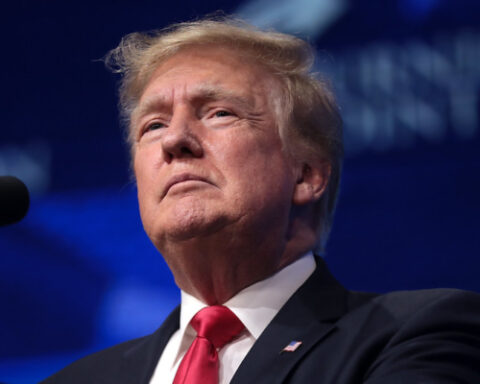
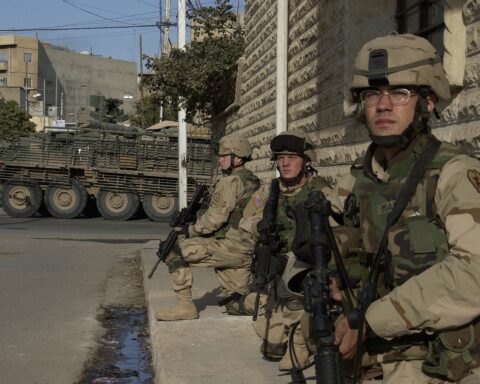
Meanwhile, Donald Trump has already deployed thousands of U.S. personnel to the region since the conflict began, including 2,000 troops from the 82nd Airborne and 3,500 sailors and Marines. Despite the buildup, the president indicated Tuesday that the United States would be leaving Iran “very soon,” even as gas prices continue to climb.
McCormick’s comments highlight a familiar crossroads in American foreign policy: whether decisive force can truly shorten conflicts, or whether even well-intentioned escalations risk deepening U.S. involvement in wars that prove far more complex than anticipated.
[READ MORE: Lawmakers Seek Answers as Hegseth Faces First Public Test on Iran Strategy]