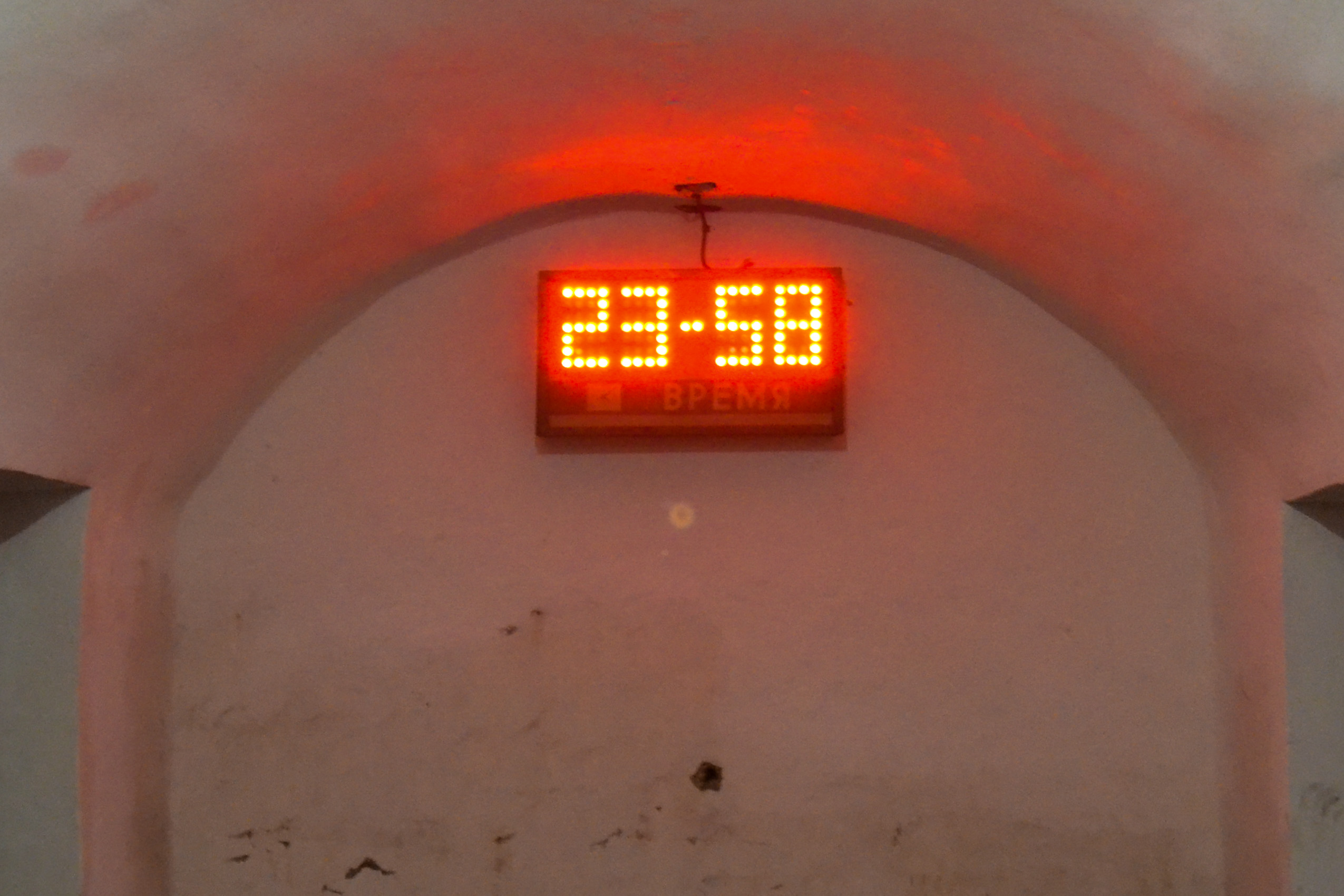
The world edged closer to catastrophe over the past year, according to the Bulletin of Atomic Scientists, which on Tuesday moved the hands of its symbolic Doomsday Clock four seconds closer to midnight, setting it at just 85 seconds — the closest it has ever been.
The Doomsday Clock, an 80-year-old warning tool, is intended to serve as an urgent call for governments and citizens alike to confront threats pushing humanity toward disaster. Its creators say the clock is meant not as fatalism, but as a reminder that human decisions still matter.
Among the dangers cited are the risk of nuclear annihilation, climate-related disasters, the rapid development of artificial intelligence outpacing regulatory frameworks, biological threats and disease spread, and the rise of authoritarianism coupled with widespread misinformation.
Daniel Holz, chair of the Science and Security Board of the Bulletin of the Atomic Scientists and a physics professor at the University of Chicago, said the four-second jump was unusually large and deeply concerning.
“We’re now jumping four seconds, which is a large jump, to 85 seconds, which is the closest it’s been ever,” Holz said. Still, he emphasized that the warning is intended to motivate action, not despair.
“The main message is we should be worried, but there are many things that can be done that would turn back the clock,” he said. “This is a fundamentally optimistic exercise. The whole point of this is there are ways to turn back the clock.”
The clock had been frozen at 90 seconds to midnight throughout 2023, but scientists say developments over the past year warranted another move forward. While President Donald Trump’s return to office was not singled out as the primary cause, the group argued that some of his actions have worsened existing global challenges.
Maria Ressa, an investigative journalist and CEO of the news outlet Rappler who won the 2021 Nobel Peace Prize for her reporting on authoritarianism in the Philippines, warned that misinformation is now a central threat.
“We are living through an information Armageddon,” Ressa said, arguing that the inability to distinguish fact from fiction undermines democratic societies and fuels global instability.
One of the most immediate concerns highlighted by the scientists is the looming expiration of the New START nuclear arms control treaty between the United States and Russia, set to expire in February. The agreement places limits on the nuclear arsenals of both nations and allows for transparency through data sharing.
Jon Wolfsthal, director of global risk at the Federation of American Scientists and a former Obama administration national security adviser, said extending the treaty should have been a top priority.
“I don’t want to make it sound like this is simple, but this is a piece of low-hanging fruit that the Trump administration should have seized months ago,” Wolfsthal said.
Wolfsthal argued that Trump and Russian President Vladimir Putin could extend the treaty immediately and criticized the administration for failing to assign senior officials to focus on the issue.
“The reality is, under multiple administrations before Trump, this was the daily work of government and international security,” he said. “And under Donald Trump it has ceased.”
Despite the grim assessment, the Bulletin stressed that the clock is not a prediction of inevitable doom, but a warning meant to spur cooperation and decisive leadership.
“We need to band together and take those actions,” Holz said. “It’s in all of our interest to do so.”
As the clock ticks closer to midnight, the scientists say the message is clear: the margin for error is shrinking, and the responsibility to reverse course rests squarely with today’s leaders.
[READ MORE: Venezuela’s Acting President Pushes Back on U.S. Pressure After Maduro’s Capture]
Nonsense. God will determine the end and it will occur not one second before or after.