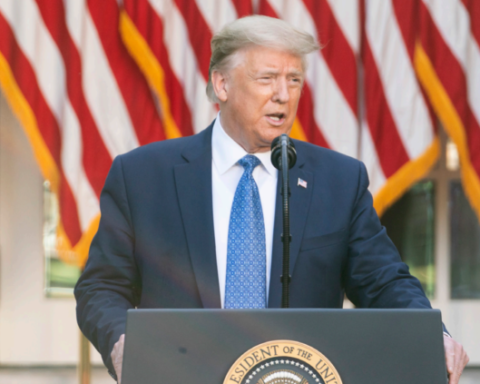
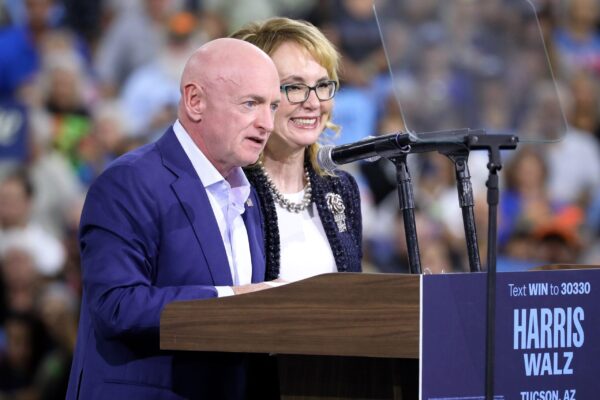
Sen. Mark Kelly pushed back Monday against recent remarks from President Donald Trump regarding potential strikes on Iranian infrastructure, arguing that such rhetoric risks crossing a dangerous line in both law and principle.
In a post on X, Kelly responded directly to Trump’s threats aimed at Iran, stating that “threatening to target power plants and other non-military targets is not strength.” The Arizona Democrat, a retired Navy captain, warned that if such statements were translated into action, they could violate the laws governing armed conflict.
“If those words become orders to destroy civilian infrastructure with no valid military purpose, it’s hard to see how they would not violate the laws of armed conflict,” Kelly wrote. He added that the United States has long projected leadership through “strength, discipline, and professionalism,” cautioning that orders resulting in civilian suffering would mark a serious stain on both the military and the country.
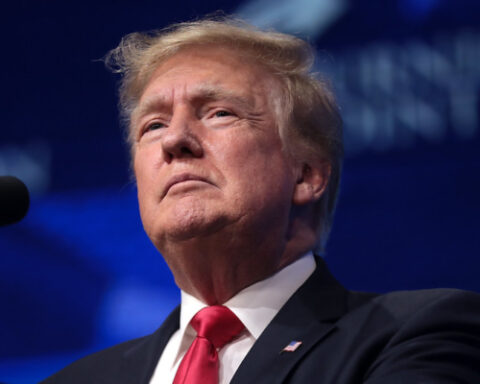
Kelly’s comments came in response to a Truth Social post from Trump on Sunday, in which the president demanded that Tehran reopen the Strait of Hormuz, a vital global oil passage that has remained effectively closed since the conflict began. In that post, Trump issued a stark warning, declaring that “Tuesday will be Power Plant Day, and Bridge Day” in Iran if the situation is not resolved.
The remarks quickly drew backlash, with critics arguing that targeting civilian infrastructure would represent a significant escalation. The exchange highlights an ongoing divide over how the United States should approach the conflict, which has now entered its second month.
Trump has repeatedly emphasized the importance of reopening the Strait of Hormuz, a key artery for global energy supplies, framing it as a necessary step toward restoring stability. At the same time, his rhetoric has raised concerns among some lawmakers about how far the U.S. should go in pursuing that objective.
The tension between projecting strength and avoiding unnecessary escalation has become a defining feature of the current debate. While calls for decisive action resonate with those seeking a swift resolution, others caution that certain measures could carry long-term consequences that outweigh short-term gains.
Kelly’s criticism also reflects his previous clashes with the administration. Late last year, he became involved in a dispute after appearing in a video alongside other Democratic lawmakers urging military service members not to follow what they described as “illegal orders.” That earlier episode underscored broader concerns about maintaining clear legal and ethical boundaries during times of conflict.
On Tuesday, Trump escalated his rhetoric further with another post suggesting dire consequences if a deal with Iran is not reached. “A whole civilization will die tonight,” he wrote, adding that while he did not want such an outcome, “it probably will.” He also referenced the possibility of “Complete and Total Regime Change,” suggesting that new leadership in Iran could lead to a different future.
As the deadline for a potential agreement approaches, the exchange between Kelly and Trump underscores a deeper question facing policymakers: how to assert American power while remaining anchored to established rules of warfare.
For many, the issue is not simply about strategy, but about preserving the standards that distinguish lawful military action from actions that risk broader harm. In a conflict already marked by high stakes, the line between strength and overreach remains at the center of the debate.
[READ MORE: Report Details Troubling Allegations Against Rep. Tony Gonzales as Scrutiny Intensifies]