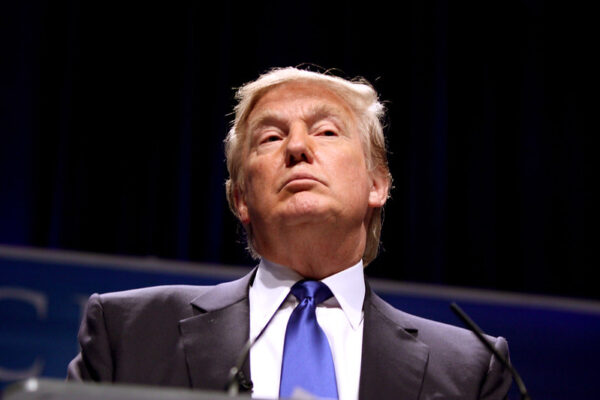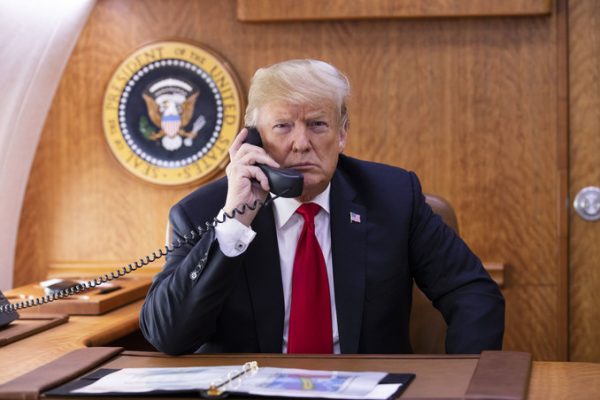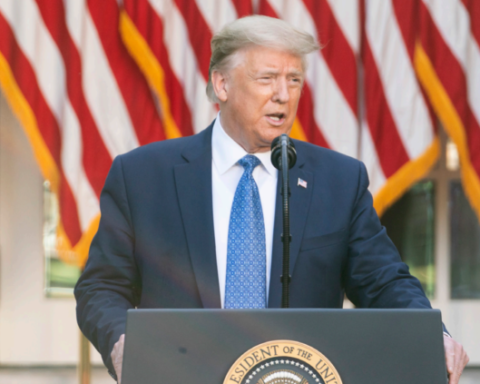
President Donald Trump delivered a blunt and forceful warning Monday morning, declaring that any Iranian vessels attempting to challenge the newly imposed U.S. blockade would be swiftly destroyed, underscoring the administration’s hardline posture after diplomatic efforts fell short.
In a post on Truth Social, issued just minutes after the blockade of the Strait of Hormuz took effect at 10:00 a.m. ET, Trump described the potential consequences in stark terms. He stated that any ships approaching the blockade would be “ELIMINATED,” drawing a direct comparison to prior U.S. operations targeting suspected drug-running boats from South America.
“Iran’s Navy is laying at the bottom of the sea, completely obliterated – 158 ships,” Trump wrote, while noting that smaller “fast attack ships” had not been targeted previously because they were not seen as a major threat. That calculus, however, appears to have changed under the current policy. “If any of these ships come anywhere close to our BLOCKADE, they will be immediately ELIMINATED,” he added, emphasizing the speed and severity of the response.
The president also pointed to what he described as a broader success in maritime enforcement, claiming that 98.2% of drugs entering the United States by sea have been stopped. While the administration has framed such operations as necessary to protect American interests, critics have long warned that expanding military engagement in international waters risks unintended consequences and deeper entanglements.
The heightened rhetoric comes on the heels of a failed diplomatic push led by Vice President JD Vance, who recently traveled to Pakistan for high-stakes negotiations with Iranian officials. The meeting marked a rare moment of direct engagement, with Vance becoming the highest-ranking U.S. official to meet face-to-face with Iranian leaders since the Iranian Revolution.
Despite what Vance described as a “quite flexible” approach from the American delegation, the talks ultimately broke down. The U.S. team, which included special envoy Steve Witkoff and presidential adviser Jared Kushner, sought what Vance called an “affirmative commitment” from Iran that it would not pursue a nuclear weapon. According to the vice president, that assurance was not forthcoming.
With negotiations yielding no agreement, Trump moved quickly to announce the blockade, signaling a shift from diplomacy to deterrence. The decision reflects a broader strategy that prioritizes pressure and enforcement, though it also raises questions about how far such measures might go and what risks they carry.
Trump’s comparison to anti-drug operations highlights the administration’s reliance on established military tactics, noting that dozens of Latin American vessels have been struck since last fall under similar justifications. Still, applying that approach to a geopolitical flashpoint like the Strait of Hormuz introduces a far more volatile dynamic, where even a single miscalculation could carry serious consequences.
As tensions mount, the situation illustrates the delicate balance between projecting strength and avoiding escalation. While the administration has made clear it intends to act decisively, the absence of a diplomatic breakthrough leaves the region on edge, with the potential costs of conflict lingering just beneath the surface.
[READ MORE: Trump Orders Naval Blockade of Strait of Hormuz After Talks With Iran Collapse]