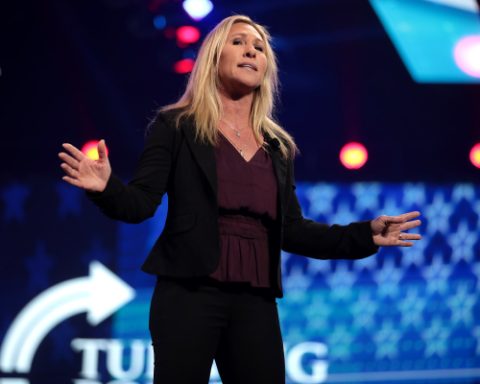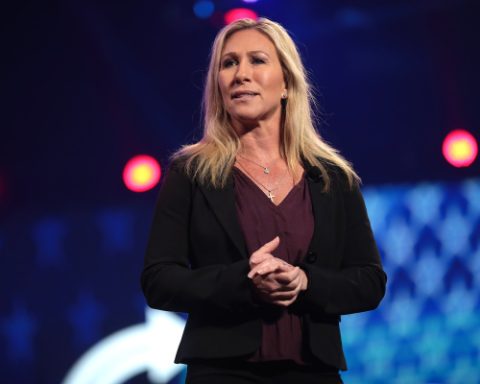
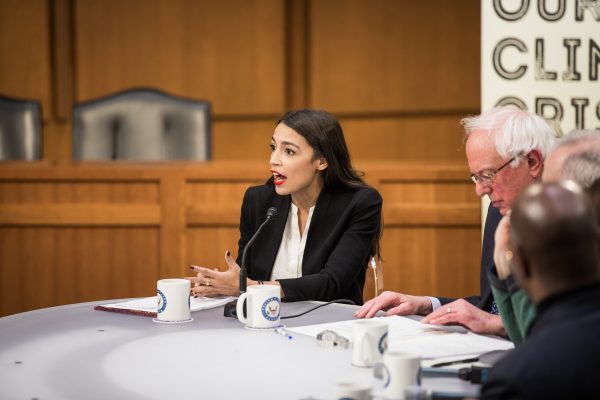
Rep. Alexandria Ocasio-Cortez made clear Friday that while she is willing to work across the aisle in certain cases, she believes there are firm limits on who the political left should associate with—especially when it comes to Rep. Marjorie Taylor Greene.
Speaking at an event hosted by the University of Chicago Institute of Politics, Ocasio-Cortez addressed questions about bipartisanship and whether her past criticisms of fellow lawmakers have complicated efforts to cooperate with Republicans.
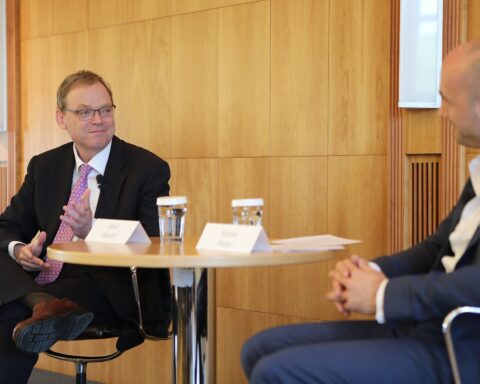
The progressive lawmaker stood by her earlier remarks that there were “legitimate white supremacist sympathizers” within the House Republican caucus, insisting that her comments remain accurate. At the same time, she pointed to her willingness to collaborate with Republican Rep. Tim Burchett on efforts to ban congressional insider trading as evidence that working across party lines is still possible when there is a shared goal.
Ocasio-Cortez acknowledged that Burchett has previously insulted her, recalling that he called her a “communist” and a “witch.” But she dismissed those personal attacks as secondary to what she described as the importance of achieving tangible policy outcomes.
“We’ve got to ban insider trading in Congress,” she said, emphasizing that results—not rhetoric—should guide cooperation when appropriate.
Still, the New York Democrat drew a sharp distinction between issue-based collaboration and broader political alignment. She argued that not all partnerships are equal and that judgment must be exercised when deciding whom to work with and on what issues.
That line, she suggested, becomes especially important when dealing with figures like Greene. Ocasio-Cortez labeled Greene “a proven bigot and anti-Semite” and said she does not trust her on matters involving the ongoing conflict affecting Gazans and Israelis.
“I personally do not trust someone like Marjorie Taylor Greene on the issues of what is good for Gazans and Israelis,” Ocasio-Cortez said. “I don’t think that it benefits our movement… to align the left with white nationalists.”
Her comments come as Greene has, in recent months, found an unusual degree of support from some on the political left following her break with President Donald Trump. That shift has raised questions about whether political alliances are being reshaped in unexpected ways.
But Ocasio-Cortez rejected that notion outright, arguing that political cooperation must be rooted not only in shared policy goals but also in trust, intent, and the likely consequences of those alliances.
“It’s about looking at the context, the place, the results, the outcomes, intentions,” she explained, underscoring that not every opportunity for bipartisanship is worth pursuing.
The exchange highlights a broader tension in Washington: how to balance the push for legislative results with concerns about legitimizing controversial figures. While lawmakers often tout bipartisanship as a virtue, moments like this reveal the limits of that ideal—particularly when deeply held differences over values and rhetoric come into play.
At a time when foreign conflicts and domestic divisions continue to shape the political landscape, Ocasio-Cortez’s remarks suggest that even those open to cooperation are wary of crossing certain lines. In her view, some partnerships may carry costs that outweigh any potential gains, especially when the stakes involve both policy outcomes and broader moral considerations.
[READ MORE: Tennessee Redistricting Battle Sparks Secession Talk in Memphis]