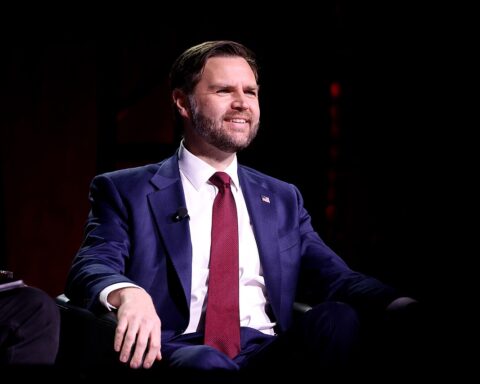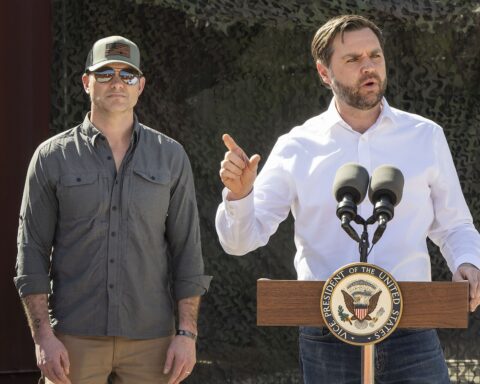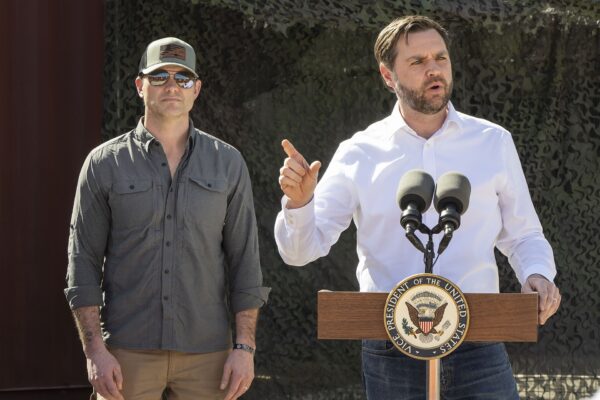
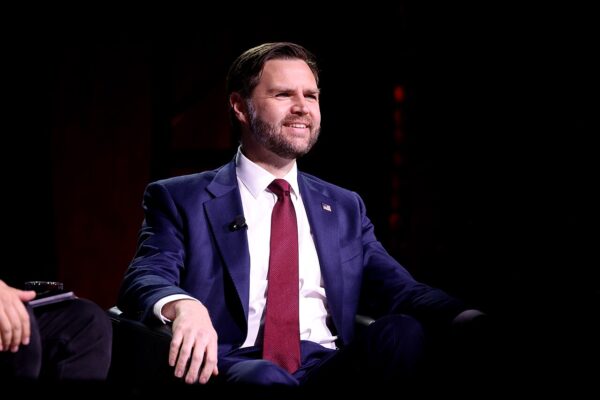
Vice President JD Vance said Wednesday that he is seriously concerned about the possibility that sensitive conversations inside the White House Situation Room may have been leaked to reporters, warning that the disclosure of such information could have significant legal and national security implications.
Vance made the remarks during an appearance on SiriusXM’s The Megyn Kelly Show, where he discussed recent media reports detailing private administration deliberations and how those reports could affect his political future.
“There’s always an element of truth. There’s always an element of nontruth,” Vance said when discussing the reporting. But he added that some details contained in the reports stood out enough to raise deeper concerns.
“There were certain things in there that legitimately made me worried that people were like taping,” Vance said. “Which by the way is like a felony.”
The comments follow a series of reports examining both the administration’s handling of issues related to convicted sex offender Jeffrey Epstein and internal discussions surrounding U.S. strategy during the Iran conflict.
One report alleged that Vance played a leading role in managing the administration’s response to fallout connected to the release of files related to Epstein. Another report from The New York Times detailed discussions involving President Donald Trump and senior officials during meetings held inside the Situation Room as the administration weighed strategy during the Iran war.
The vice president’s concerns appear to focus less on political criticism and more on how reporters may have gained access to highly sensitive conversations.
Administration officials have not publicly disputed specific details contained in the reporting. Instead, they have concentrated on questions surrounding the apparent flow of information from some of the government’s most secure meeting spaces.
According to an excerpt from the upcoming book Regime Change: Inside the Imperial Presidency of Donald Trump by journalists Maggie Haberman and Jonathan Swan, Vance urged Cabinet officials to release all files connected to Epstein, including unsubstantiated allegations involving Trump.
The book also reportedly includes direct quotations attributed to Vance, acting Attorney General Todd Blanche, White House Chief of Staff Susie Wiles, and White House Communications Director Steven Cheung. According to the reporting, those officials were involved in discussions aimed at developing a strategy for handling political fallout related to the Epstein controversy.
The reporting further alleges that Blanche, who previously served as Trump’s personal attorney, discussed possible legal strategies involving courts and judges as well as issues related to Ghislaine Maxwell, Epstein’s longtime associate who remains incarcerated.
Federal ethics rules allow Department of Justice officials to discuss political strategy in certain contexts, but they are prohibited from engaging in activities that violate Hatch Act restrictions or improperly influence criminal investigations.
While critics have focused on the substance of the reports, administration officials have increasingly highlighted concerns about how confidential conversations may have become public.
One administration source told Axios that officials fear some of their most sensitive discussions may have been recorded.
“We’re afraid some of our most sensitive conversations were being recorded,” the source said. “And we have no idea which ones.”
The controversy is already drawing attention on Capitol Hill. Rep. Robert Garcia (D-Calif.), the ranking member of the House Oversight and Government Reform Committee, has indicated that he intends to launch an investigation based on The New York Times reporting.
Garcia has also said he plans to seek Vance’s testimony regarding what he described as a potential Epstein “cover-up” involving the administration.
For Vance and other administration officials, however, the immediate concern appears to be the possibility that confidential national security discussions may have found their way outside secure channels. At a time when foreign policy decisions and sensitive legal matters continue to dominate headlines, questions about the security of internal deliberations are rapidly becoming a controversy of their own.
[READ MORE: Vance Defends Iran Agreement, Questions Critics as Senators Seek Answers on MOU Details]