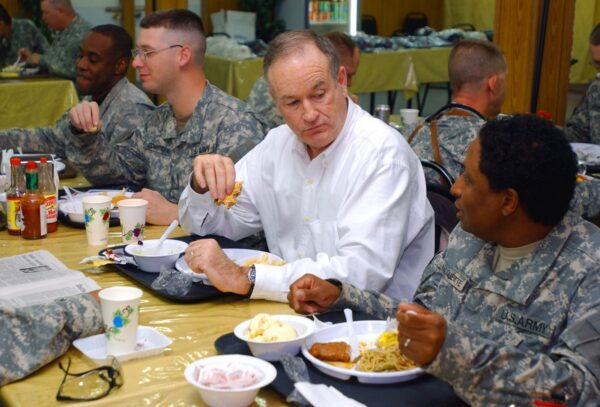
Political commentator Bill O’Reilly sharply criticized ongoing negotiations between the United States and Iran on Wednesday, dismissing the diplomatic process as a “farce” as military exchanges between the two countries continued to escalate.
Appearing on NewsNation’s On Balance with host Leland Vittert, O’Reilly argued that few people still believe meaningful progress is being made at the negotiating table.
“The negotiations are a farce. Everybody knows it, [the] American public knows it,” O’Reilly said during the interview.
His remarks came amid another week of military confrontation between Washington and Tehran. Earlier this week, the United States launched strikes against Iran after Iranian forces shot down an American Apache helicopter near the Strait of Hormuz. U.S. forces subsequently carried out a drone-assisted rescue operation to recover the helicopter’s two crew members. Both service members were reported to be in stable condition as of Tuesday.
The latest military actions have added to growing doubts about whether diplomacy can still play a meaningful role in ending the conflict.
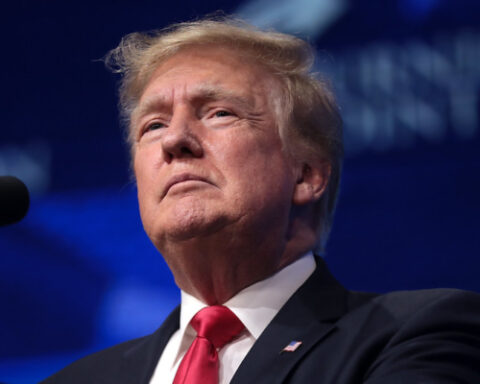
President Donald Trump expressed frustration with the pace of negotiations on Wednesday, saying Iranian officials had “taken too long” during talks and warning that consequences would follow. His comments stood in contrast to repeated statements over recent months suggesting that the two sides were nearing a potential agreement.
The rhetoric intensified further on Thursday when Trump warned of additional military action against Iran and announced plans involving Kharg Island, a major Iranian oil depot.
“The United States will be hitting Iran (Whose Navy, Air Force, Radar, Anti Aircraft, and all other forms of Defense, together with most of its offensive capability, are GONE!), VERY HARD TONIGHT,” Trump wrote on Truth Social.
While some policymakers and analysts continue to discuss diplomatic options, O’Reilly argued that military force remains the only realistic path available if the administration hopes to bring the conflict to a decisive conclusion.
According to O’Reilly, there is no practical alternative to additional strikes.
“You got to hit them very, very hard with your military,” he told Vittert. “So, I’ve been thinking about it, is there another way? There isn’t another way.”
The conflict has already spread beyond direct exchanges between the United States and Iran. In response to American strikes, Iran launched missiles toward Jordan, Bahrain and Kuwait, three countries that host American military personnel and facilities.
Those attacks prompted condemnation from several governments across the Middle East. Foreign ministries in Qatar, Saudi Arabia and the United Arab Emirates all criticized the missile launches, reflecting growing concern throughout the region that the fighting could continue to expand.
Meanwhile, U.S. Central Command announced late Wednesday that American forces had carried out additional strikes targeting Iranian military surveillance systems, communications infrastructure and air defense positions.
Even as military operations continued, some governments remained involved in efforts to preserve a diplomatic channel. Tahir Andrabi, spokesperson for Pakistan’s Ministry of Foreign Affairs, acknowledged Thursday that the latest escalation has significantly complicated the prospects for peace.
He said the growing hostilities have narrowed the available space for diplomacy and made optimism increasingly difficult. Nevertheless, Andrabi emphasized that Pakistan, which has served as a mediator between the United States and Iran, remains committed to pursuing discussions aimed at reducing tensions.
“We understand the challenges, we understand how the diplomatic space has shrunk because of these hostilities. But I will certainly say that we have not lost hopes,” Andrabi told reporters.
His comments underscored the increasingly difficult balance between military escalation and diplomatic efforts, as both sides continue exchanging strikes while mediators search for a path toward ending the conflict.
[READ MORE: Iran Strikes Back After U.S. Retaliation as Fragile Ceasefire Faces New Pressure]