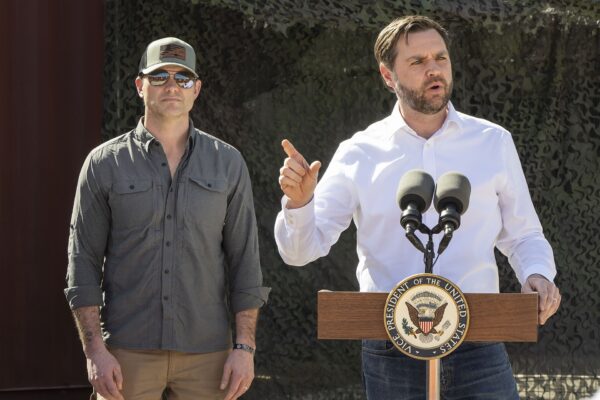
Vice President JD Vance pushed back Tuesday against criticism of the administration’s Iran agreement, arguing that some of the loudest opponents of the deal appear more concerned about ending the conflict than they were about beginning it.
The remarks come as lawmakers from both parties continue seeking access to the text of the memorandum of understanding signed over the weekend, with many senators expressing caution about judging the agreement before reviewing its contents.
The MOU is expected to pause hostilities for another 60 days while negotiations with Tehran continue regarding Iran’s nuclear program. According to reports, the arrangement would allow Iran to resume oil exports immediately while offering additional financial incentives if the regime agrees to make concessions related to its nuclear activities.
Appearing on “The Megyn Kelly Show,” Vance defended both the administration’s handling of the conflict and its decision to move forward without first obtaining congressional approval.
“To be clear, I don’t think congressional approval was required,” Vance said. He argued that the military action did not constitute a traditional full-scale war in either the conventional or legal sense and maintained that the administration took the necessary steps to ensure its actions complied with applicable requirements.
Vance said he wanted to defend the administration’s approach before addressing criticism coming from some members of his own party.
“But it is kind of ironic that they’re really, really worried about stopping this thing, while they were completely gung-ho about starting this thing,” he said, referring to hawkish Republican critics.
The vice president’s comments reflect an emerging divide among conservatives over the agreement. While many Republicans supported military action against Iran, some have expressed skepticism about the administration’s efforts to negotiate a settlement and provide economic incentives as part of the process.
During the interview, Megyn Kelly noted that criticism of the agreement has come from several corners, including right-leaning media figures and Israel’s ambassador to the United States. Questions have also been raised about reports that Iran could gain access to a $300 billion private reconstruction fund.
Vance argued that many critics have not fully engaged with the actual terms of the agreement and have failed to present a realistic alternative.
“I just don’t think the people criticizing this are actually dealing with the reality of what’s in it,” he said.
The vice president also warned against pursuing military action without a clearly defined objective.
“If your alternative is just to drop bombs without any clear goal or any clear American interest implicated, then you’re not making the wise decisions on behalf of the American people,” Vance said. “The president is.”
His comments highlighted a broader debate that often follows military conflicts: how to convert battlefield gains into a durable political outcome while avoiding an open-ended cycle of escalation.
Meanwhile, lawmakers on Capitol Hill continue pressing for greater transparency.
President Donald Trump told reporters Tuesday in France that he intends to send the agreement to Congress. That move comes amid questions about the requirements of the 2015 Iran Nuclear Agreement Review Act, which states that any deal must be submitted to lawmakers for review before sanctions can be lifted.
Several Republican senators have indicated they are withholding judgment until they can examine the agreement themselves.
Sen. Lindsey Graham of South Carolina said the way Iran describes the agreement raises concerns, while the administration’s explanation appears more reasonable to him.
“The MOU, I want to see it myself,” Graham said. “Let’s look at it and see what it actually is.”
Other Republicans have voiced similar concerns.
“If it’s a secret deal, then how can I take it seriously?” Sen. Thom Tillis of North Carolina said Monday, according to Reuters.
Senate Majority Leader John Thune also acknowledged that lawmakers are still attempting to obtain the text, noting that in more than two decades in the Senate, he has not encountered a similar situation.
For now, much of the debate surrounding the agreement continues to revolve around a simple question: what exactly is in the document? Until lawmakers receive and review the text, both supporters and critics appear likely to remain cautious about drawing final conclusions.
[READ MORE: Trump Promises Full Release of Iran Agreement After Facing Questions Over Secrecy]