A federal judge on Thursday declined to throw out legal challenges to President Donald Trump’s executive order aimed at tightening election procedures, ruling that concerns related to the upcoming 2026 midterm elections are ripe for review while broader objections will have to wait.
The lawsuits were filed in April by a coalition of voter education nonprofits and a group of Democratic-led states seeking to block the executive order. Among other provisions, the order requires states to verify that only U.S. citizens are registered to vote and directs federal agencies to take a larger role in election-related verification efforts.
U.S. District Judge Indira Talwani rejected the Trump administration’s request to dismiss the challenges entirely, allowing portions of the cases connected to the November midterm elections to proceed. In a 17-page consolidated order, Talwani pointed to the limited time remaining before key election deadlines and primary contests begin.
The judge wrote that delaying judicial review would be impractical given the approaching deadlines contained in the executive order and the fact that elections will be taking place over the next several months. She noted that the November 3, 2026, midterm election is now only months away and said postponing a decision could create significant hardships for the plaintiffs.
At the same time, Talwani drew a distinction between concerns tied to the upcoming election cycle and those involving future elections. She acknowledged that significant uncertainty remains regarding how federal agencies will ultimately implement various aspects of the order. Because of those unknowns, she concluded that challenges extending beyond the 2026 midterms are premature.
Talwani, who was appointed to the federal bench by former President Barack Obama, stopped short of ruling on the merits of the executive order itself. Instead, her decision focused on whether the lawsuits could move forward at this stage.
California Attorney General Rob Bonta, whose office is leading the states’ lawsuit, welcomed the ruling. A spokesperson for Bonta said the administration’s effort to dismiss the case as premature had been rejected with respect to the upcoming election and expressed confidence as the litigation moves ahead.
The executive order is part of a broader effort by Trump during his second term to reshape federal election procedures. The president has argued that mail-in voting practices and instances of undocumented immigrants voting have contributed to election fraud, though the article notes there is little evidence supporting those claims.
Trump himself has voted by mail in previous elections, including a recent special election in Florida.
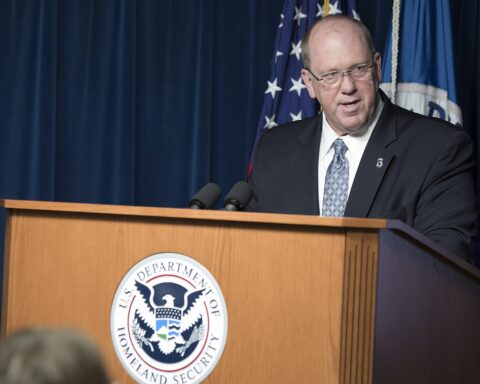
Signed in March, the order directs Homeland Security Secretary Markwayne Mullin to work with the Social Security Administration to create a list of verified U.S. citizens eligible to vote. It also bars the U.S. Postal Service from sending ballots to individuals not included on that list.
Additionally, the order instructs the attorney general to prioritize investigations and prosecutions involving allegations that ballots were sent to individuals considered ineligible to vote.
The White House defended the policy following Thursday’s ruling. Spokesperson Abigail Jackson said the administration remains committed to advancing the election security agenda that Trump campaigned on and argued that securing elections is a common-sense objective supported by millions of Americans.
The executive order quickly became the target of multiple lawsuits filed by nearly two dozen states, the District of Columbia, and voting-rights organizations. Opponents argue that the order exceeds presidential authority because states are responsible for administering federal elections. They also contend that compliance would require significant expenditures of time and resources while potentially creating confusion in the election process.
The American Civil Liberties Union and other plaintiffs praised the ruling, saying the court recognized the urgency of the case and allowed challenges related to this year’s elections to continue. They pledged to keep fighting to protect access to mail-in voting and ensure eligible voters can cast ballots.
The legal battle over the order continues as both sides prepare for further court proceedings, with major questions surrounding election administration likely to remain at the center of debate ahead of the 2026 midterms.
[READ MORE: Vance Raises Alarm Over Possible Situation Room Leaks Following Reports on Iran War Deliberations]