A retired U.S. Army general is cautioning that Iran may be far more resilient than some expect, even as American and Israeli forces continue a sustained military campaign that is now stretching into its fourth week with no clear end in sight.
Speaking on MS Now, retired Maj. Gen. James “Spider” Marks said the Iranian regime is unlikely to collapse quickly under pressure and could hold out for “a couple of years, minimally,” despite the scale of ongoing strikes. His assessment adds a sobering note to an increasingly complex situation facing President Donald Trump, who must now weigh whether to continue an expensive military campaign or pursue a diplomatic off-ramp.
“I don’t see the regime giving up. I don’t see the regime giving in,” Marks said, likening Iran’s posture to a scene from Monty Python and the Holy Grail, where a battered opponent insists it can continue fighting despite mounting damage. In his view, the regime’s primary objective is survival, and it appears prepared to endure significant losses to achieve that end.
The comments come as the administration confronts a difficult set of choices. Marks described the current bombing campaign as “very costly,” not only in financial terms but also politically, suggesting that prolonged military action carries consequences beyond the battlefield. He framed the options in stark terms: either find a way to declare the conflict finished through diplomacy or escalate further.
President Trump initially indicated the war might last four to five weeks, but recent developments suggest a longer timeline may be taking shape. The White House is preparing to ask Congress for $200 billion in supplemental funding to sustain the military effort, a move that has raised concerns about how deeply the United States may be committing to the conflict.
At the same time, the administration has signaled at least some openness to a diplomatic solution, particularly as economic pressures mount. Yet alongside those signals are indications that military involvement could expand. Officials are reportedly considering operations to secure safe passage for oil tankers through the Strait of Hormuz, a critical shipping lane that has effectively been closed by Iran since the war began on Feb. 28.
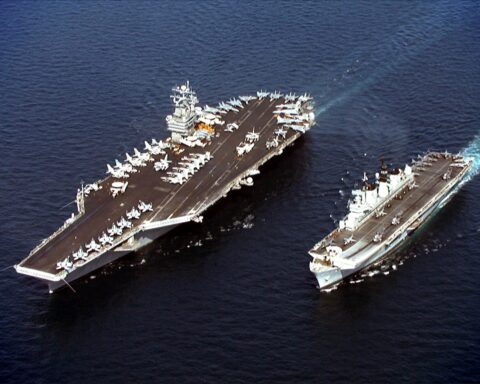
Such a move would likely require a significant deployment of U.S. air and naval forces, underscoring how quickly efforts to stabilize one aspect of the conflict can deepen overall involvement.
There are also signs that regional dynamics could further complicate the situation. According to reports, U.S. allies Saudi Arabia and the United Arab Emirates appear increasingly willing to join the fight following continued Iranian attacks on their territory. Their potential involvement could broaden the scope of the conflict, raising the stakes even higher.
Marks emphasized the fundamental differences between how the United States and Iran approach such conflicts. While Iran is focused primarily on survival, he noted, the United States must balance a wide range of domestic and international considerations, making decision-making more complex and, at times, more constrained.
“This Iranian regime and the United States, they measure themselves against two entirely different standards,” he said, pointing to the challenges of confronting an adversary with fewer internal pressures.
The warning highlights a central tension in the current strategy. While military strength may deliver immediate results, it does not necessarily guarantee a swift resolution—especially against an opponent willing to endure prolonged hardship.
As Washington debates its next steps, Marks’ assessment suggests that what may have begun as a limited campaign could evolve into something far more enduring, testing not only military capabilities but the nation’s willingness to sustain the costs that come with it.
[READ MORE: Graham Pushes Bold Iran Strategy as Debate Intensifies Over Risks of Escalation]