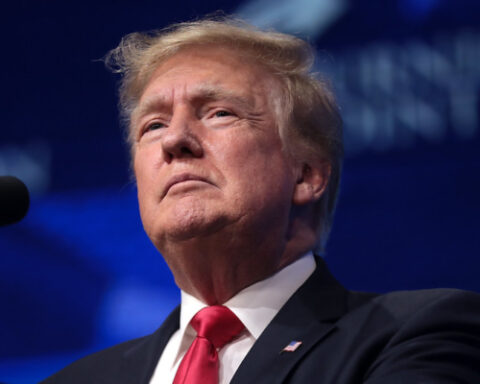
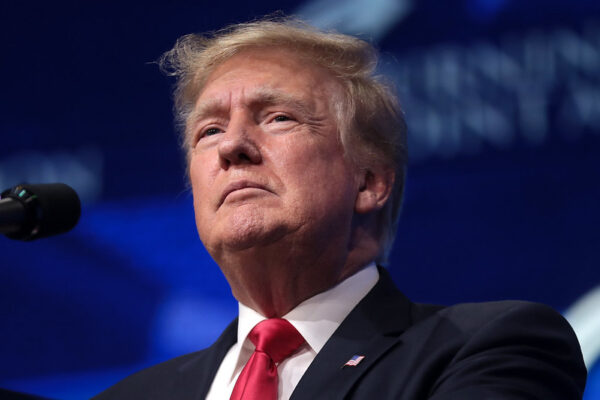
President Donald Trump escalated his rhetoric Monday morning, warning that the United States could target Iran’s critical infrastructure if ongoing negotiations fail to produce a swift agreement.
In a post on Truth Social, Trump said the U.S. is currently engaged in “serious discussions” with what he described as a “new, and more reasonable, regime” in Iran, expressing optimism that a deal to end military operations could be reached soon. However, he made clear that patience has its limits.
“If for any reason a deal is not shortly reached,” Trump wrote, adding that it “probably will be,” the United States could respond by “blowing up and completely obliterating” Iran’s electric generating plants, oil wells, and Kharg Island, along with potentially its desalination facilities. He emphasized that these assets had not yet been targeted, framing the threat as a form of potential retribution for American casualties attributed to Iran’s leadership over what he called a 47-year “reign of terror.”
The remarks underscore the administration’s continued reliance on pressure tactics, even as it signals openness to diplomacy. Yet they also highlight a growing debate—both inside and outside Republican circles—over how far the United States should go in prosecuting the conflict.
Retired General Wesley Clark, a former NATO Supreme Allied Commander Europe, issued a cautionary note last week, warning against striking civilian infrastructure such as power plants. Clark argued that such actions could cross a legal and moral line.
“A lot of people will say it’s a war crime because mostly these power plants are probably there for the civilian population,” Clark said, adding that deliberately targeting civilian assets to pressure a government would be considered unlawful unless a clear military connection could be established.
His comments reflect broader concerns that even justified military objectives can blur into actions that risk harming civilians—an outcome that has long complicated modern warfare and raised difficult questions about proportionality and restraint.
Trump, for his part, has also suggested more expansive goals in the conflict. In an interview with the Financial Times on Sunday, he said his preferred outcome would be to “take the oil in Iran,” while noting that the U.S. has “a lot of options,” including potentially seizing Kharg Island. He acknowledged such a move could require a sustained American presence.
That prospect appears to be giving some Republicans pause. In recent weeks, allies of the president have increasingly warned against the possibility of a prolonged ground engagement. Representative Tim Burchett said Sunday that “a lot of Republicans” would oppose a ground invasion, reflecting concerns about deeper entanglement.
At the same time, others have advocated for a more limited but forceful approach. Joey Jones suggested that U.S. forces should strike decisively and then withdraw quickly, arguing for a strategy that avoids extended commitments.
The competing views reveal a tension at the heart of the current moment: a desire to project strength and achieve clear objectives, balanced against a wariness of becoming drawn into a longer, more complicated conflict. Even as the administration points to progress in talks, the stakes—and the potential consequences of escalation—remain high.
For now, the administration appears to be pursuing both tracks at once, pressing forward with negotiations while keeping the threat of overwhelming force on the table. Whether that approach leads to resolution or further escalation may depend on how those warnings are received—and how close diplomacy can come to delivering results before the next decision point arrives.
[READ MORE: Levin Makes Case for Targeted Iran Operation as Trump Weighs Next Move]