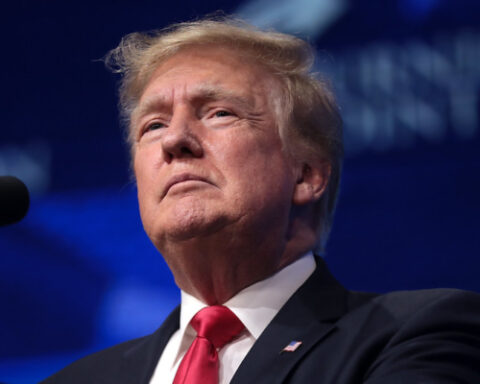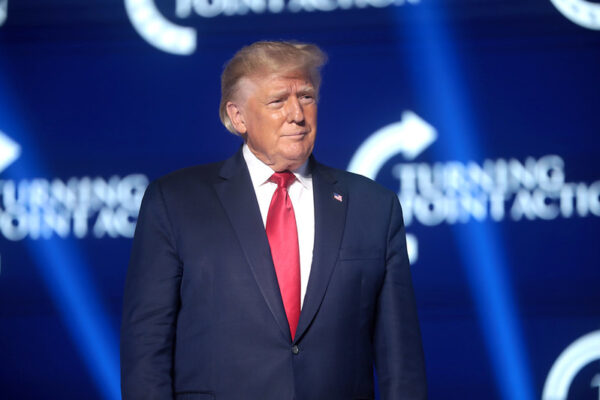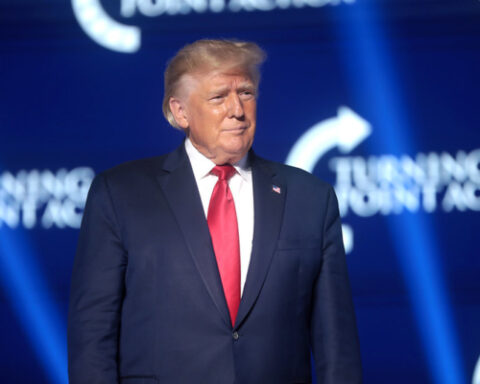
President Donald Trump announced Sunday that the United States will move forward with a naval blockade in the Strait of Hormuz, marking a significant escalation after negotiations with Iran failed to produce a breakthrough.
In a Truth Social post, Trump said the U.S. Navy would begin “the process of BLOCKADING any and all ships” attempting to enter or exit the strategic waterway. He added that American forces would “seek and interdict every vessel in international waters” that has paid a toll to Iran, signaling a direct challenge to Tehran’s efforts to exert control over the passage.
The announcement follows a weekend of talks in Islamabad, Pakistan, where U.S. and Iranian officials met in an attempt to extend or solidify a cease-fire. Those discussions ultimately fell short, with Vice President JD Vance confirming late Saturday that no agreement had been reached.
Trump said Iran was “unwilling” to negotiate on its nuclear program, a sticking point that appears to have derailed the talks. He noted that he had been briefed by Vance, along with special envoy Steve Witkoff and adviser Jared Kushner, who were present for the negotiations.
Despite acknowledging that some elements of the discussions may have been preferable to continued military operations, Trump made clear that preventing Iran from advancing its nuclear capabilities remained the overriding priority. He described Iran’s leadership as “volatile” and “unpredictable,” arguing that allowing such a government to possess nuclear power was unacceptable.
The president also pointed to ongoing U.S. efforts to remove naval mines from the Strait of Hormuz, underscoring the broader military posture that has accompanied the diplomatic push. The narrow waterway is a critical route for global shipping, and tensions there have been a focal point of the broader conflict.
The decision to impose a blockade raises the stakes considerably. While framed as a measure to protect international navigation and counter Iran’s actions, such a move risks further escalation at a moment when negotiations, however fragile, had at least offered a path away from sustained confrontation.
At the same time, the administration’s approach reflects a belief that stronger pressure may be necessary to force concessions. Trump’s language suggested little confidence that additional talks, without a shift in Iran’s position, would produce a different outcome.
The situation now places U.S. forces in a more assertive role in the region, with orders to actively intercept vessels linked to Iranian toll payments. That directive, while aimed at undermining Tehran’s leverage, introduces new uncertainties about how other nations and commercial operators will respond.
As events continue to unfold, the collapse of the Islamabad talks serves as a reminder of how difficult it has been to translate battlefield pauses into lasting agreements. Even limited progress can quickly unravel when core disputes—such as nuclear ambitions—remain unresolved.
For now, the focus shifts from diplomacy back to enforcement, with the United States betting that a show of strength will succeed where negotiations have not. Whether that approach stabilizes the situation or deepens the conflict remains an open question.
[READ MORE: Maher Mocks Ceasefire as Questions Linger Over Strait of Hormuz]