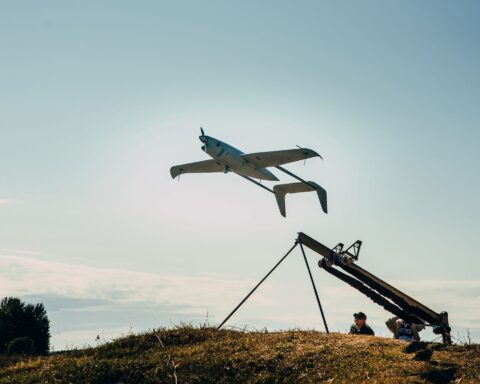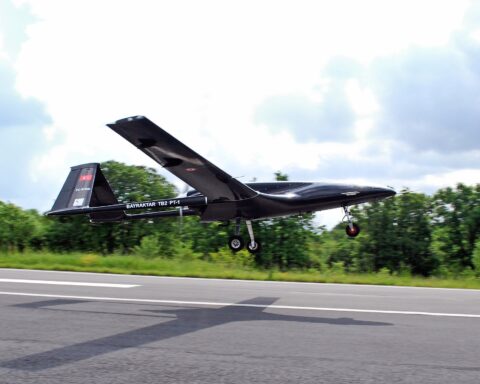
The U.S. Army is preparing to phase out a specialized drone unit tasked with studying lessons from foreign conflicts, including the widespread use of unmanned systems in the Russia-Ukraine war, an Army official confirmed Thursday.
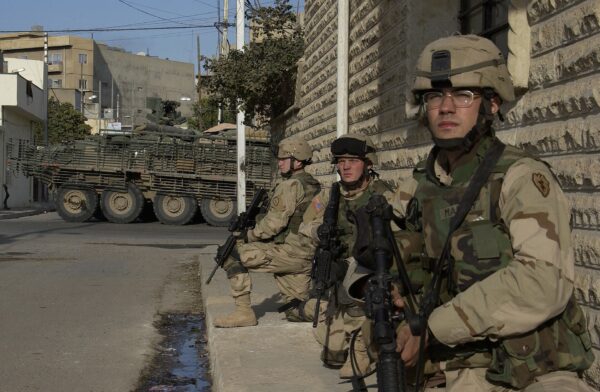
The Unmanned Assault Battalion, an infantry battalion within the 173rd Airborne Brigade, will participate in exercises at the Joint Multinational Readiness Center in Germany this month and next month. Once those exercises are completed, the battalion will return its attention to traditional airborne infantry operations.
The Army official said the unit will “refocus on its core warfighting tasks as an airborne infantry battalion assigned to a Mobile Brigade Combat Team (Airborne).”
The 173rd Airborne Brigade is a quick-reaction light infantry unit based in Vicenza, Italy. The drone initiative was championed by former Army Chief of Staff Gen. Randy George, who was removed by Defense Secretary Pete Hegseth earlier this year.
U.S. Army Europe and Africa, supported by the Army and U.S. European Command, had tasked the battalion with developing and testing an employment concept for a tactical unmanned systems battalion.
Gen. Chris Donahue, the former commander of U.S. Army Europe and Africa, also backed the effort before Hegseth removed him in July, a decision that divided Republican lawmakers on Capitol Hill.
The planned phaseout is drawing criticism from military experts who argue the war in Ukraine provides a crucial real-world testing ground for understanding how drones are reshaping combat.
Stacie Pettyjohn, a senior fellow and defense program director at the Center for a New American Security, warned that the United States remains behind in deploying small drones.
Pettyjohn said Pentagon investments alone may not solve the problem, warning the Army could purchase the wrong systems or technology that has already become obsolete without also learning how drones should be used on contested battlefields.
She pointed to a recent European exercise in which Ukrainian forces defeated U.S. Army forces as evidence that the military still has significant lessons to learn.
“The Pentagon should be taking every opportunity to learn from the Ukraine war,” Pettyjohn said, adding that Russia, China and North Korea are doing so.
Cameron McMillan, a former counter-rocket, artillery and mortar battle captain in Iraq, similarly criticized the decision, calling it one of several “puzzling steps” taken by the Army in recent months.
McMillan said the Iran war has exposed gaps in the Army’s drone defense capabilities, capacity and doctrine. He argued the challenge is even greater in Europe, where forces must contend with smaller first-person-view drones in addition to other unmanned threats.
“This drone unit was designed to incorporate and apply desperately needed lessons learned from Ukraine to help the U.S. Army adapt to this challenge,” McMillan said.
The Army Transformation Initiative launched last year by Army Secretary Dan Driscoll and George called for modernized unmanned aircraft systems while eliminating obsolete programs. Driscoll also praised Ukraine’s integrated drone network during Senate testimony in May, saying the U.S. system does not currently offer the same level of integration.
The Wall Street Journal first reported the planned phaseout.