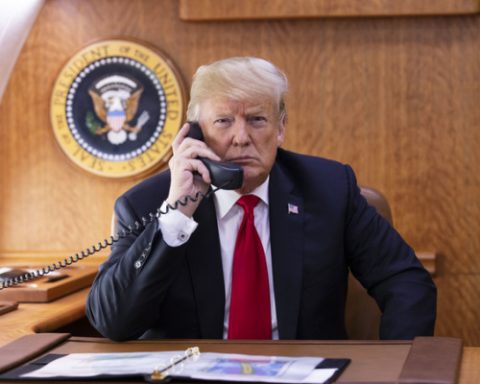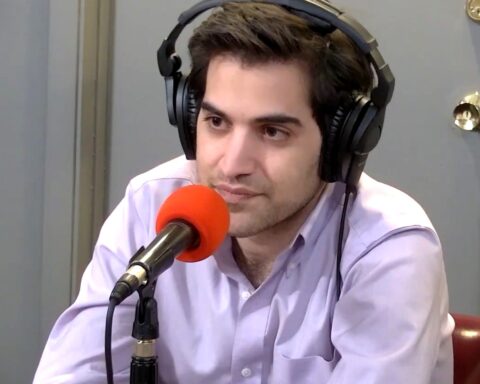
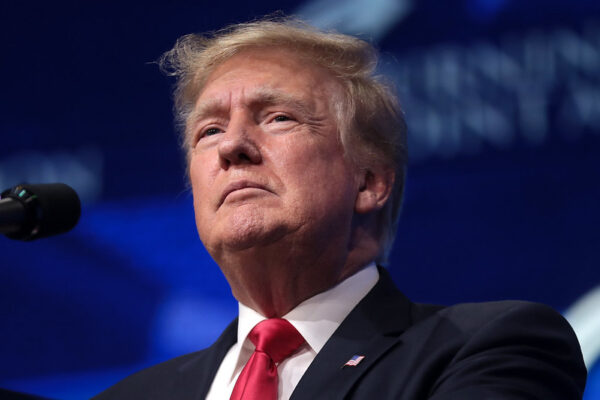
New York Times White House correspondent Maggie Haberman said Wednesday that her “sense” is that President Donald Trump is growing increasingly eager to bring the Iran war to a close, even as negotiations remain bogged down and uncertain.
Speaking during an appearance on CNN’s “The Source,” Haberman pointed to the president’s recent public comments as evidence of mounting frustration. She referenced both his Truth Social posts and a lengthy interview on CNBC’s “Squawk Box,” describing a leader who has made his impatience clear on a near-daily basis.
“He’s clearly frustrated,” Haberman said, noting that Trump has been openly voicing dissatisfaction as talks drag on without resolution.
According to Haberman, one of the central challenges lies in the conflicting perspectives among those involved in negotiations. Figures such as Trump’s son-in-law Jared Kushner and U.S. special envoy to the Middle East Steve Witkoff are approaching the situation from one angle, while countries like Pakistan and Iran bring entirely different expectations to the table.
That disconnect, she suggested, has complicated efforts to find a clear path forward. While White House press secretary Karoline Leavitt has defended the administration’s approach, Haberman noted that simply having lines of communication does not guarantee progress.
“My sense is the president would like to just be done with this,” she said, adding that Trump appears eager to shift focus to other priorities. Still, she acknowledged a hard reality that has long defined conflicts in the region: wars are rarely easy to end.
Efforts to restart diplomacy have also hit delays. Vice President J.D. Vance had been expected to hold talks with Iran in Islamabad, Pakistan earlier in the week, but those negotiations were postponed, further slowing momentum.
Meanwhile, the administration has taken steps to extend temporary pauses in fighting. On Thursday, officials announced a three-week extension of the ceasefire between Israel and Lebanon, while a separate U.S.-Iran ceasefire was extended indefinitely, contingent on Tehran agreeing to come to the negotiating table.
Not everyone is convinced the strategy is working. Former national security adviser John Bolton sharply criticized the ceasefire, arguing that it benefits Iran more than the United States or its allies. Speaking on CNN’s “News Central,” Bolton claimed the pause has provided Iran with relief after sustained pressure, potentially strengthening its position if talks resume.
Criticism has also come from the editorial pages of The Wall Street Journal, which labeled Trump a “sucker” for agreeing to multiple ceasefires that did not lead to the reopening of the Strait of Hormuz.
For his part, Trump has pushed back forcefully against those critiques, maintaining that U.S. military action has already dealt significant damage to Iran’s naval and air capabilities.
As negotiations continue to stall, the situation highlights a familiar tension in foreign policy: the desire to bring conflicts to a swift conclusion versus the stubborn, drawn-out nature of war itself. While the administration seeks an off-ramp, the path to a lasting resolution remains uncertain, underscoring how even the most determined efforts can struggle against the realities of a complex and enduring conflict.
[READ MORE: Eric Trump Touts U.S. Innovation Edge as Robotics Firm Secures Pentagon Deal]