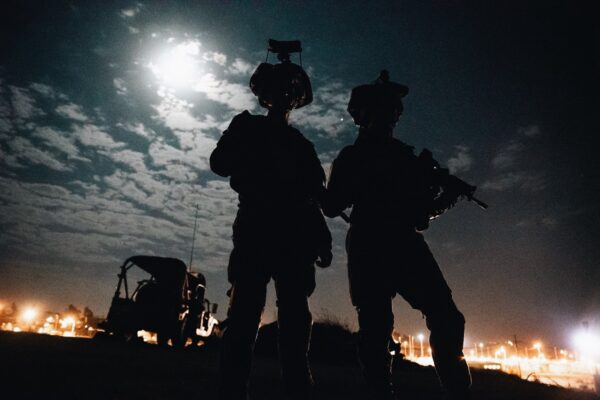
The United States reportedly carried out a military strike against what officials described as a “terrorist” target in Ecuador on Tuesday, signaling a firm show of force as Washington continues broader military operations abroad, including its ongoing conflict with Iran.
U.S. Southern Command (SOUTHCOM) announced that American and Ecuadorian military forces conducted joint operations targeting what it called “Designated Terrorist Organizations in Ecuador.” According to SOUTHCOM, the narco-terrorist groups involved have “long inflicted terror, violence, and corruption on citizens throughout the hemisphere,” fueling instability across the region.
The operation represents a notable shift in U.S. involvement in Ecuador. In the past, American military efforts in the country largely focused on training and advisory missions. Tuesday’s action, however, marked a transition toward direct operational engagement alongside Ecuadorian forces.
SOUTHCOM Commander Gen. Francis L. Donovan praised Ecuador’s military for its role in the mission, highlighting what he described as the “unwavering commitment” and “courage” of Ecuadorian troops. Donovan framed the joint effort as a decisive blow against narco-terrorism, which he said has spread violence and corruption throughout the Western Hemisphere.
The operation follows years of escalating security concerns inside Ecuador and reflects a broader strategy championed by Ecuadorian President Daniel Noboa.
Noboa, who first took office in 2023 and secured a full four-year term in April 2025, has consistently pushed for stronger international cooperation to confront the country’s growing security crisis. The Miami-born conservative leader, who has aligned himself politically with President Donald Trump, has argued that criminal gangs operating in Ecuador are no longer merely local groups but part of international narco-terrorist networks.
According to Noboa, these networks are responsible for roughly 70 percent of the world’s cocaine transit, making Ecuador a key battleground in the fight against organized crime and drug trafficking.
To strengthen cooperation with Ecuador, the United States took several major steps throughout 2025 to formally classify key criminal groups as terrorist organizations.
In September 2025, Washington designated two of Ecuador’s most notorious gangs—Los Choneros and Los Lobos—as Foreign Terrorist Organizations. The move placed them alongside other groups previously labeled with the same designation earlier in the year.
In February 2025, the United States designated Venezuela’s Tren de Aragua and two powerful Mexican cartels—the Sinaloa cartel and the Jalisco New Generation Cartel (CJNG)—as Foreign Terrorist Organizations. All of these groups maintain significant operational presence inside Ecuador.
Law enforcement cooperation between the two countries also intensified last year. In July 2025, José Adolfo Macías Villamar, widely known by the alias “Fito” and identified as the leader of Los Choneros, was extradited to the United States.
The growing crackdown comes as Ecuador grapples with a dramatic surge in violence tied to organized crime. Despite Noboa’s aggressive security policies—including declaring an “internal armed conflict” in 2024—the country has struggled with soaring homicide rates.
In 2024 alone, Ecuador recorded nearly 7,000 homicides, the highest murder rate in Latin America. The escalating violence has also triggered a wave of displacement, forcing approximately 95,000 Ecuadorians to flee the country.
Noboa’s approach stands in sharp contrast to previous governments in Ecuador. In 2014, the leftist administration of former President Rafael Correa expelled the U.S. military from the country.
Under Noboa, Ecuador has taken the opposite approach. The president has actively welcomed deeper cooperation with Washington and has even expressed interest in hosting a permanent U.S. military base.
For the United States, officials view a stable and pro-American Ecuador as a crucial strategic partner in the region—one that can serve as a key barrier against the influence of ideological groups hostile to American interests.
[READ MORE: Trump Warns Iran’s Future Could Worsen if New Leader Mirrors Khamenei]