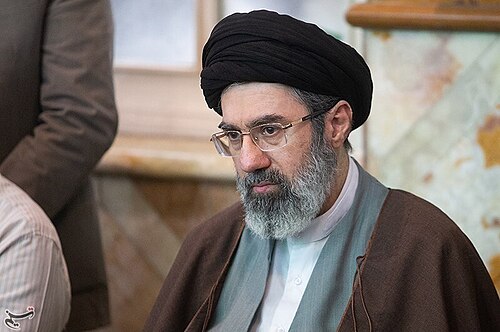
Iran’s newly installed supreme leader, Mojtaba Khamenei, issued a defiant message Thursday promising to continue blocking the Strait of Hormuz and vowing retaliation for Iranians killed in the ongoing conflict, signaling that tensions surrounding the war show little sign of easing.
The statement, read aloud on Iranian state television, marked Khamenei’s first public remarks since he took power earlier in the week following the death of his father, longtime Iranian leader Ali Khamenei. The elder Khamenei was killed in a blast on the opening day of Operation Epic Fury, an event that reshaped the leadership of the Islamic Republic almost overnight.
In the message broadcast to the nation, the new supreme leader struck a hard tone, pledging that Iran would not back down in the face of what he described as bloodshed suffered by the country.
Khamenei said he would continue “avenging the blood of the martyrs” killed during the war, a phrase that echoed the kind of rhetoric often heard from Tehran’s leadership during periods of heightened confrontation. He also made clear that Iran would maintain its blockade of the Strait of Hormuz, a strategic maritime passage that serves as one of the world’s most important routes for the movement of oil.
The narrow waterway, located between the Persian Gulf and the Gulf of Oman, has long been considered a pressure point in global energy markets. Any disruption to shipping through the strait can send ripples through economies far beyond the Middle East, underscoring how regional conflicts can quickly carry global consequences.
Khamenei’s pledge to keep the strait blocked suggests that the confrontation may remain entrenched, even as the conflict continues to unfold.
The statement also reinforced the new leader’s promise to seek revenge for Iranians killed during the war. While such declarations are not uncommon in wartime speeches from Tehran, the tone served as a reminder of how deeply the conflict has already shaped the political narrative inside Iran.
At the same time, the circumstances surrounding Mojtaba Khamenei’s rise to power remain clouded in uncertainty.
Despite assuming the leadership position on Monday, the new supreme leader has not appeared in public since taking office. His absence has fueled speculation that he may have been seriously injured in the same explosion that killed his father at the outset of Operation Epic Fury.
Iranian officials have not confirmed those reports, and the statement delivered through state media offered no additional details about his condition. Instead, the message focused almost entirely on pledges of resistance and retaliation.
The lack of a public appearance from the country’s top leader has raised questions about the stability of Iran’s leadership during a volatile moment in the region. In times of war, appearances by national leaders often serve as a signal of control and confidence to both domestic and international audiences.
For now, however, Mojtaba Khamenei’s voice — rather than his presence — is the only sign the world has seen from the man who suddenly inherited the leadership of one of the Middle East’s most powerful states.
His remarks leave little doubt about the direction he intends to take, at least rhetorically: continued defiance, continued retaliation, and continued pressure on one of the world’s most vital energy chokepoints.
As the conflict moves forward, the message underscores a broader reality that has played out repeatedly in modern conflicts — once wars begin to escalate, they rarely resolve quickly, and the consequences often stretch far beyond the battlefield.
[READ MORE: Trump Targets Rep. Thomas Massie in Kentucky Primary Showdown as Iran War Debate Divides Republicans]