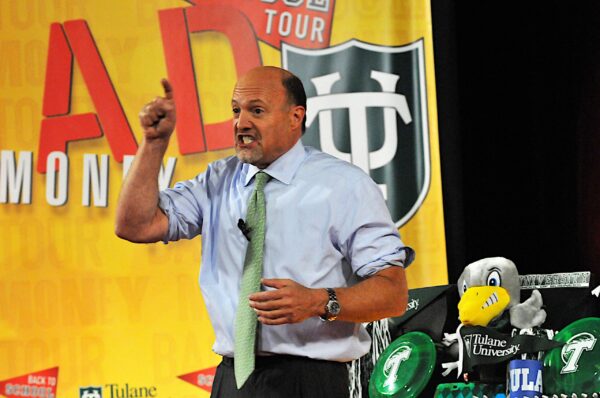
CNBC host Jim Cramer ignited controversy this week after invoking the Vietnam War while calling for overwhelming military force against Iran, a remark that quickly drew attention as tensions continue to rise amid the ongoing conflict in the region.
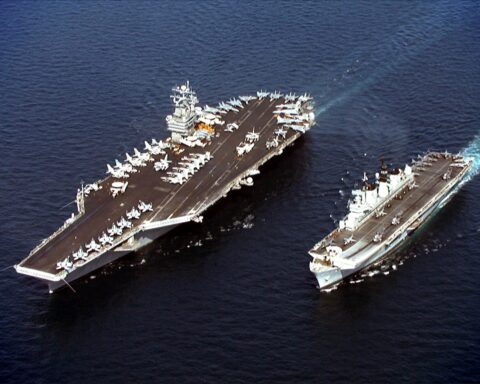
The comments came as global oil markets remain on edge. Crude oil hovered near $100 per barrel Thursday after surging in the wake of a bombing campaign launched by the United States and Israel against Iran. Tehran has retaliated with attacks targeting Israel, U.S. military assets in the region, and vessels passing through the Strait of Hormuz, a narrow but critical maritime passage through which roughly 20 percent of the world’s oil supply travels.
For all practical purposes, the strait is now considered closed, sending shockwaves through energy markets and raising fears of even higher prices. Iranian officials have signaled their intention to disrupt the oil market further, potentially driving prices as high as $200 per barrel.
Against that backdrop, Cramer vented his frustration on social media, posting a message that suggested the United States should take a far more aggressive military posture.
“If the infrastructure is not taken out and the money is not taken away why should Iran come to the peace table,” Cramer wrote. “They are taunting us with $200 oil. They do not have the cards; our military must be unleashed. Time to do what we did to Hanoi…to get them to the table.”
The reference to Hanoi immediately raised eyebrows. During the Vietnam War, the United States carried out extensive bombing campaigns against North Vietnam, including strikes targeting the capital city. The conflict ultimately ended with the U.S. withdrawing from Vietnam, a fact that did not go unnoticed by critics responding to Cramer’s post.
In fact, a community note attached to his message pointed readers to a Wikipedia article on the Vietnam War and reminded viewers that the United States ultimately lost the conflict and withdrew.
Cramer later appeared to walk back his remarks in a series of follow-up posts issued hours after the original comment. In those messages, he clarified that he was not advocating for a repeat of the Vietnam-era strategy.
“Understand i do not want a North Vietnam situation,” Cramer wrote. “That will be terrible. Things would be getting totally out of hand. What matters is safety of our warfighters and a resolution.”
He continued by arguing that the central goal should be ending the conflict as quickly as possible.
“It is vital that this war end, and if possible, on our terms, if we can get them,” Cramer wrote in another post. “I am saying that Kissinger had a solution, but it was a horrible solution. We want something that is not horrendous. But we need an off ramp.”
In a third post, the television personality apologized to anyone who believed he was endorsing the Vietnam-era bombing strategy.
“And i am very sorry if i offended,” he wrote. “That’s wrong to do. I simply wanted to remind people what could happen. NOT WHAT I WANT TO HAPPEN. I protested then to that solution. it was horrendous. I apologize if anyone thought i favored that solution.”
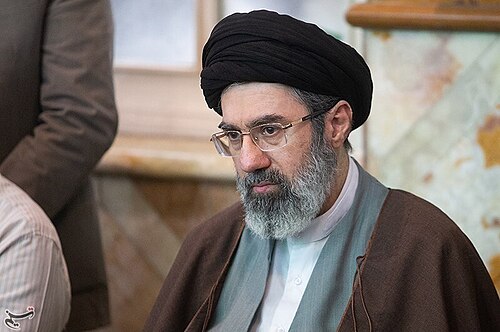
The broader conflict continues to intensify. Since the war began on Feb. 28, more than 1,300 Iranians have been killed, including Iran’s Supreme Leader Ali Khamenei and dozens of other senior officials. Iran’s retaliatory strikes have targeted Israel, U.S. military installations in the region, and commercial shipping.
The fighting has also taken a toll on American forces. Seven U.S. service members have been killed so far, with dozens more wounded.
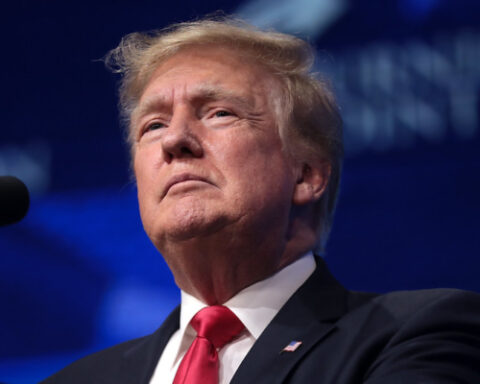
Cramer has also voiced concerns about how the war is being conducted. Speaking Tuesday on CNBC’s Squawk on the Street, he criticized President Donald Trump’s handling of the conflict.
“We seem to be indiscriminate, and indiscriminate doesn’t get us anywhere,” Cramer said.
His remarks reflect the uneasy debate surrounding the conflict—one that mixes calls for strength with growing worries about how quickly wars can spiral beyond their original aims. As the situation continues to unfold, the stakes remain high not just for the region but for global markets and American troops caught in the middle.
[READ MORE: Iran’s New Supreme Leader Vows to Keep Strait of Hormuz Blocked as War Rhetoric Escalates]