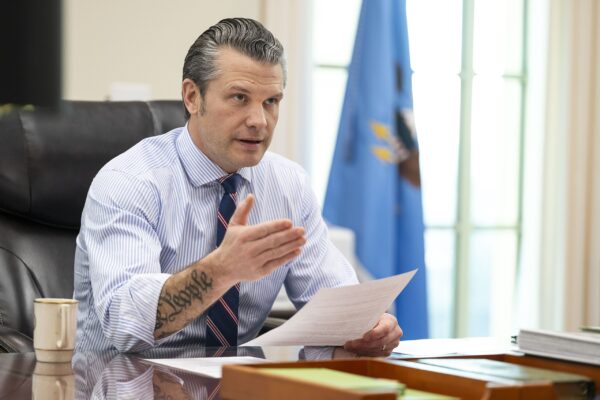
Defense Secretary Pete Hegseth is reportedly now set to appear before the House Armed Services Committee on April 29, marking the first public opportunity for lawmakers to question him on camera since the conflict with Iran began—an appearance that is already drawing heightened attention across Washington.
While the hearing is officially scheduled to address the Defense Department’s annual budget request, it is widely expected to turn into a broader examination of the administration’s military approach. With the war now underway, members of Congress from both parties appear increasingly eager to press for clarity on strategy, objectives, and long-term planning.
The hearing was first reported by Mychael Schnell and David Rohde, who noted that the session could serve as a pivotal moment for public accountability. After weeks of limited visibility into the administration’s decision-making, lawmakers are signaling that they want answers delivered in a transparent, open setting.
That push has been led in part by Democrats on the committee, all 27 of whom signed a letter last week urging Chairman Mike Rogers to convene immediate public testimony. In their message, they argued that the military action against Iran warrants direct and public explanation from Defense Department leadership, rather than relying solely on private briefings behind closed doors.
But the call for greater transparency is not coming from Democrats alone. Following a recent classified briefing with Hegseth and other senior officials, some Republicans have also begun expressing unease about how much information is being shared—and how much is being withheld.
Rogers himself, a Republican, broke with the White House in a notable moment of candor, stating that the administration “needs to be more forthcoming.” His comments suggest that concerns about transparency may be cutting across party lines, particularly as the conflict evolves and the stakes continue to rise.
“I feel like the people they sent over here to brief us are being very constrained,” Rogers said, adding that lawmakers “deserve more answers than we’re given.” The remark reflects a growing frustration among members who say that current briefings have not provided sufficient detail to fully understand the administration’s plans.
The upcoming hearing, then, is shaping up as more than a routine budget discussion. It represents a rare public forum where questions about the direction of the conflict, the goals of the operation, and the potential risks involved can be raised directly—and answered, at least in part, in front of the American people.
At a time when military decisions carry significant consequences, both strategically and politically, the demand for clarity is becoming harder to dismiss. Support for a strong national defense remains a cornerstone for many lawmakers, but that support often comes with an expectation of accountability—especially when American forces are engaged abroad.
As April 29 approaches, the focus will likely be on whether the administration can provide the kind of clear, consistent messaging that has so far remained elusive. And while the hearing may not resolve every concern, it will offer a critical window into how leaders are navigating a conflict that, for many, still raises as many questions as it answers.
[READ MORE: Trump Issues Stark Warning to Iran as Debate Grows Over Limits of U.S. Military Action]