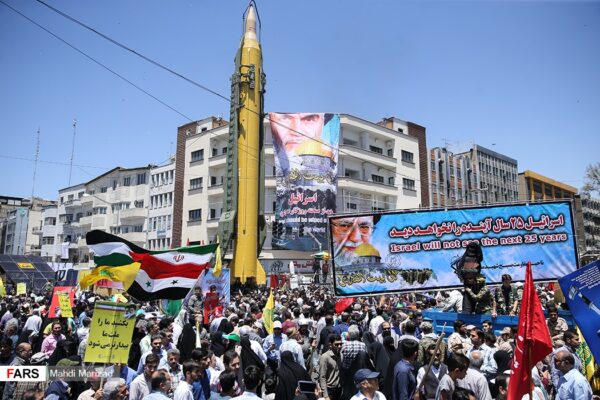
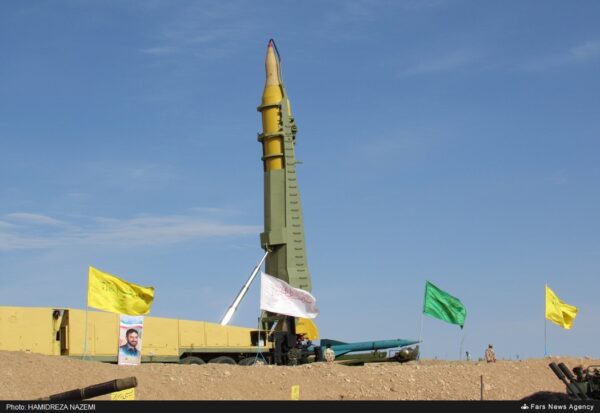
Iran responded forcefully to President Donald Trump’s Wednesday evening address, launching a wave of missile attacks across Israel and key Gulf states in a show of defiance, even as reports swirl about possible ceasefire discussions behind the scenes.
Shortly after Trump told Americans that U.S. objectives in the region were “nearing completion,” Iran made clear it was not backing down. Lt. Col. Ebrahim Zolfaghari, an Iranian military spokesperson, dismissed the impact of recent strikes and warned that Tehran’s military capabilities remain far from exhausted.
“The centers you think you have targeted are insignificant,” Zolfaghari said in remarks reported by The Associated Press, adding that Iran’s strategic production facilities are located in areas beyond the reach of its adversaries.
The timing of Iran’s response was striking. Within an hour of Trump’s speech concluding, missiles were launched toward Israel and Bahrain, following earlier strikes aimed at Dubai during the address itself. The barrage continued into Thursday morning, with Saudi Arabia reporting that it had intercepted additional Iranian missiles. The expanding scope of attacks underscores the widening regional footprint of a conflict that shows little sign of slowing.
Wednesday also saw Iran strike a QatarEnergy oil tanker carrying a crew of 21 and hit Kuwait’s airport—targets that highlight the growing risks to both civilian infrastructure and global commerce. Over the past month, Iran’s continued targeting of Gulf nations has taken a toll on the region’s energy and tourism sectors, even as those countries attempt to maintain a careful neutrality to avoid provoking further escalation.
Despite their public posture, regional powers are reportedly urging Washington to see the conflict through to its conclusion, reflecting concerns that an unresolved standoff could leave Iran in a position to threaten the region again. Still, the costs of such a path—both economic and human—remain an undercurrent in the unfolding situation.
Diplomatic channels appear strained at best. Iran has acknowledged receiving messages from U.S. special envoy Steve Witkoff, but Foreign Minister Abbas Araghchi made clear that trust between the two sides is nonexistent.
Vice President J.D. Vance has reportedly been floated as a potential negotiator, though it remains unclear whether Iran is willing to engage in formal talks. Tehran is expected to demand significant concessions in exchange for reopening the Strait of Hormuz and relinquishing any remaining nuclear material—two central goals for the United States and its allies.
The strategic waterway remains a focal point of the crisis. Its closure has sent crude oil prices surging worldwide, placing additional strain on already uneasy markets. While Trump has stepped back from the idea of forcibly reopening the strait, he has called on other nations—particularly those heavily dependent on Middle Eastern oil—to take a more active role.
“Let South Korea do it… Let Japan do it… Let China do it,” Trump said earlier Wednesday, pointing to the global stakes tied to the region’s energy supply and the risks borne by American forces stationed nearby.
Meanwhile, intelligence reports suggest that China and Russia have been quietly aiding Iran with information, aiming to strengthen their strategic foothold in the Middle East. Beijing is also preparing to send humanitarian aid to several countries in the region, following its recent diplomatic outreach efforts.
As the conflict intensifies, Trump’s promise of a swift resolution faces a stark reality: each new round of strikes raises the stakes, complicating the path to peace and leaving the region—and global markets—on edge.
[READ MORE: GOP Lawmaker Argues Swift Action in Iran Could End Conflict, Revives Debate Over America’s War Strategy]