Tensions in the Middle East took a sharp and troubling turn as Iran’s Revolutionary Guards reportedly attacked multiple cargo vessels in the strategically vital Strait of Hormuz, raising fresh concerns about the stability of an already fragile ceasefire.
According to Iran’s state television, three ships were targeted in the incidents, which unfolded despite ongoing efforts to maintain calm in the region. Two of the vessels — the MSC Francesca and the Epaminondas — came under fire Wednesday morning, with Iran’s Revolutionary Guard claiming both ships are now in its custody, as reported by the Associated Press.
A third vessel, the Euphoria, was also struck by gunfire and later left “stranded” along Iran’s coastline, according to reports from the semiofficial Nour News, Fars, and Mehr outlets. At the time of reporting, the ships’ owners had not responded to requests for comment, leaving key details about the crews and cargo uncertain.
The attacks come at a particularly delicate moment, as a ceasefire hangs in the balance and diplomatic efforts between the United States and Iran appear to be losing momentum. What had been a tentative pathway toward de-escalation is now clouded by renewed aggression, underscoring just how quickly progress can unravel in a region long defined by volatility.
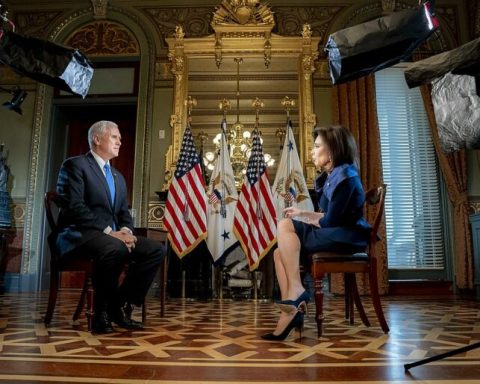
Vice President JD Vance had been expected to travel to Pakistan to begin another round of negotiations with Iranian officials. However, that trip was abruptly put on hold after Iran signaled it had not yet agreed to participate in talks. The delay adds another layer of uncertainty to an already strained diplomatic process, suggesting that even basic coordination between the parties remains elusive.
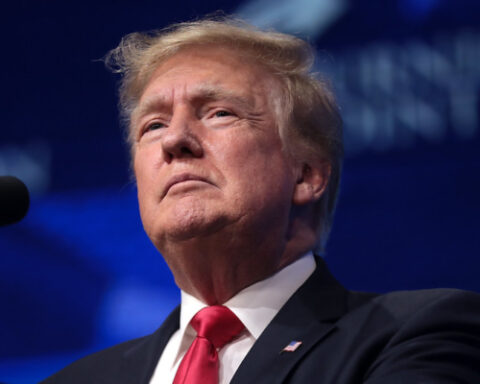
Meanwhile, President Donald Trump weighed in with a blunt assessment of Iran’s motivations, arguing that Tehran’s posture on the Strait of Hormuz is driven more by economic desperation than strategic calculation. In a series of posts on Truth Social, Trump insisted that Iran ultimately wants the vital shipping lane open, not closed, citing the massive financial losses the country would incur otherwise.
“Iran doesn’t want the Strait of Hormuz closed,” Trump wrote, claiming the nation stands to lose roughly $500 million per day if the waterway remains blocked. He further suggested that Iran’s public rhetoric about closing the strait is merely an attempt to “save face” amid mounting internal pressure.
In a follow-up message, Trump painted a picture of a regime under significant financial strain, asserting that Iran is “collapsing financially” and struggling to meet basic obligations, including paying its military and police forces.
Still, the contrast between such claims and the reported attacks on commercial shipping highlights a deeper contradiction at the heart of the crisis. Even as economic pressures mount, the use of force in one of the world’s most critical maritime corridors risks escalating tensions in ways that could prove costly for all sides involved.
The Strait of Hormuz remains a crucial artery for global energy supplies, and any disruption carries far-reaching consequences. While leaders continue to speak in terms of deals and negotiations, incidents like these serve as a stark reminder that peace in the region is often fragile — and that even in moments of supposed calm, the specter of conflict is never far away.
[READ MORE: Ceasefire Tested as Iran Targets Cargo Ships in Strait of Hormuz]