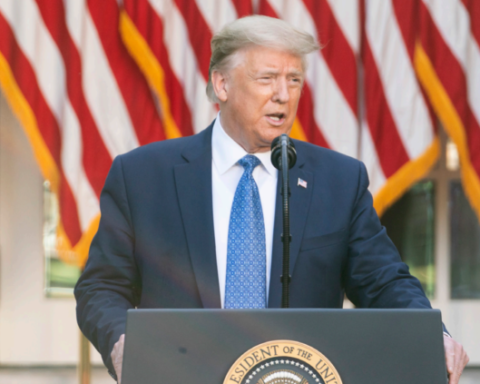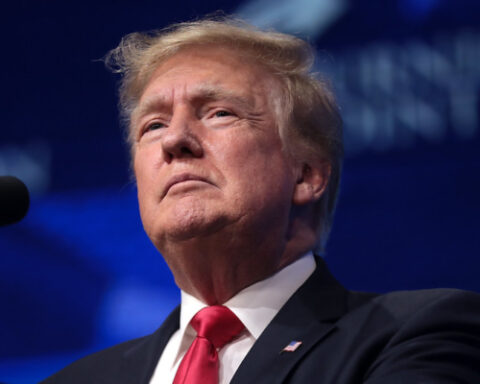

President Donald Trump’s decision to nominate a seasoned public health official to head the Centers for Disease Control and Prevention is being viewed as a notable shift in tone, as the administration appears to recalibrate its messaging on vaccines ahead of the upcoming midterm elections.
On Thursday, Trump announced the selection of Erica Schwartz, a longtime civil servant and former deputy surgeon general during his first term, to lead the CDC. If confirmed, Schwartz would become the agency’s fourth leader in under a year, underscoring a period of instability at one of the nation’s most critical health institutions. She would also be the second full-time director during that span.
The move comes after Health Secretary Robert F. Kennedy Jr. dismissed the previous Senate-confirmed director, Susan Monarez, following a dispute centered on vaccine policy. That decision added to ongoing turbulence within the agency, which has also faced workforce reductions, budget constraints, and even a shooting at its Atlanta headquarters.
Trump praised Schwartz’s credentials in a social media post, highlighting her education at Brown University and her service as a physician in the U.S. military. He described her as a standout figure capable of restoring confidence in the agency. Alongside Schwartz, the administration named several additional officials to bolster CDC leadership, including Sean Slovenski as deputy director and chief operating officer, Jennifer Shuford as chief medical officer, and Sara Brenner as a senior public health counselor.
Supporters of the nomination point to Schwartz’s extensive experience. Prior to her role as deputy surgeon general, she served as chief medical officer for the U.S. Coast Guard, where she led disease surveillance efforts and helped shape responses to outbreaks such as Ebola and pandemic influenza. Former Surgeon General Jerome Adams described her as a “battle-tested leader” with the expertise and integrity needed to guide the agency through a challenging period.
Others echoed that sentiment, arguing Schwartz could bring stability to a CDC still grappling with the aftermath of its COVID-19 response. David Mansdoerfer, a former senior health official, said she possesses both the managerial skill and openness to evidence-based discussion necessary to “right the ship.”
At the same time, the nomination reflects a broader political calculation. With polls indicating strong public support for vaccines, the White House appears eager to soften the more controversial aspects of its health agenda. Internal polling has warned that overt skepticism toward vaccine requirements could pose risks at the ballot box, even as other priorities like drug pricing and food safety enjoy wider appeal.
Kennedy, who has drawn criticism for past vaccine-related actions, has notably moderated his public rhetoric in recent appearances. While he has taken steps such as restructuring advisory panels and revising federal vaccine guidance, his comments during recent congressional hearings were more restrained, addressing vaccines largely in response to questioning.
Still, skepticism remains about whether a leadership change at the CDC will translate into meaningful independence. Former CDC official Debra Houry questioned whether the agency can truly chart its own course while current leadership remains in place at the Department of Health and Human Services.
For now, the administration’s approach appears to be one of recalibration rather than reversal—adjusting its public tone while navigating the political and policy challenges that have defined its health strategy.
[READ MORE: Trump Flags “Serious” Concerns Over Reports of Missing Nuclear Scientists]